
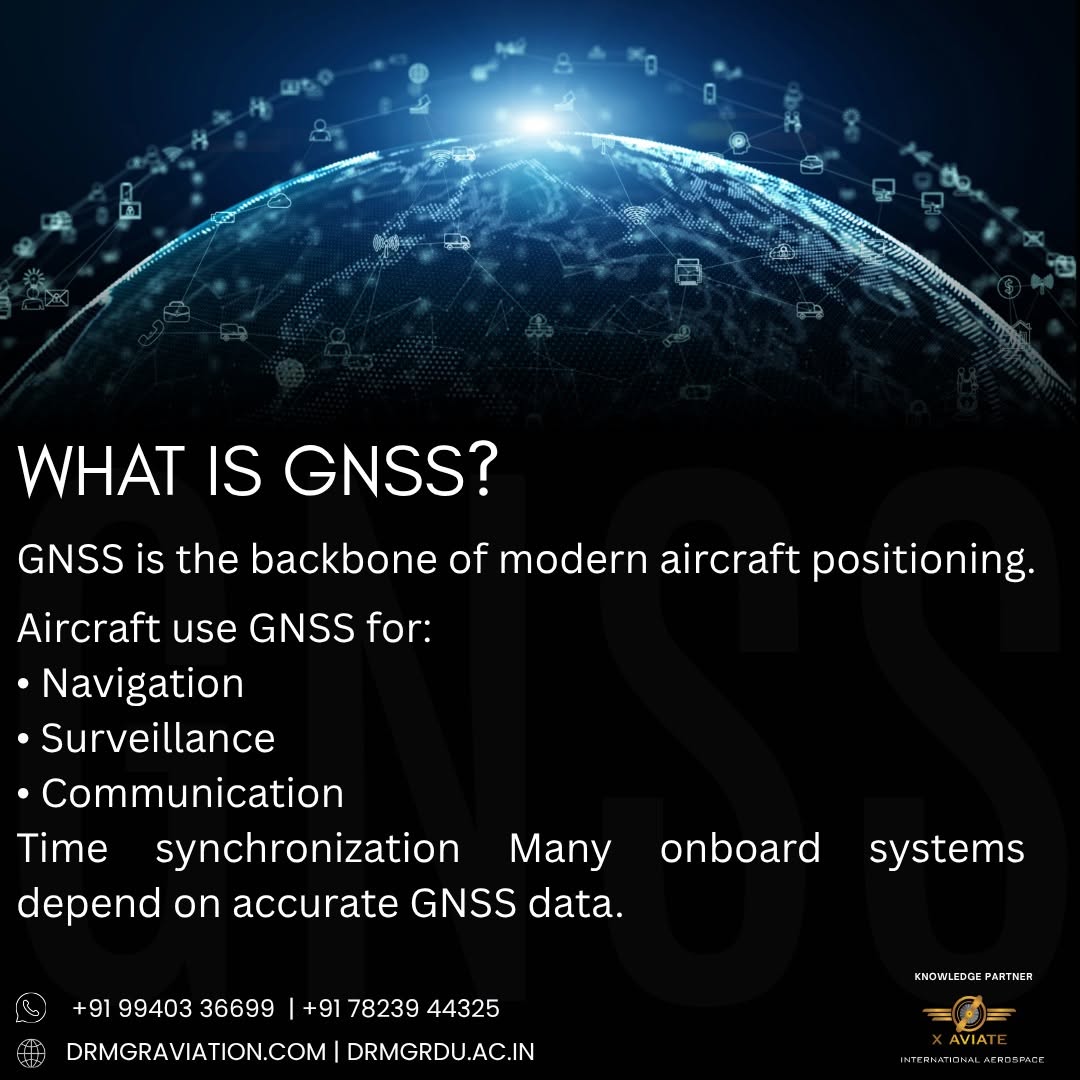
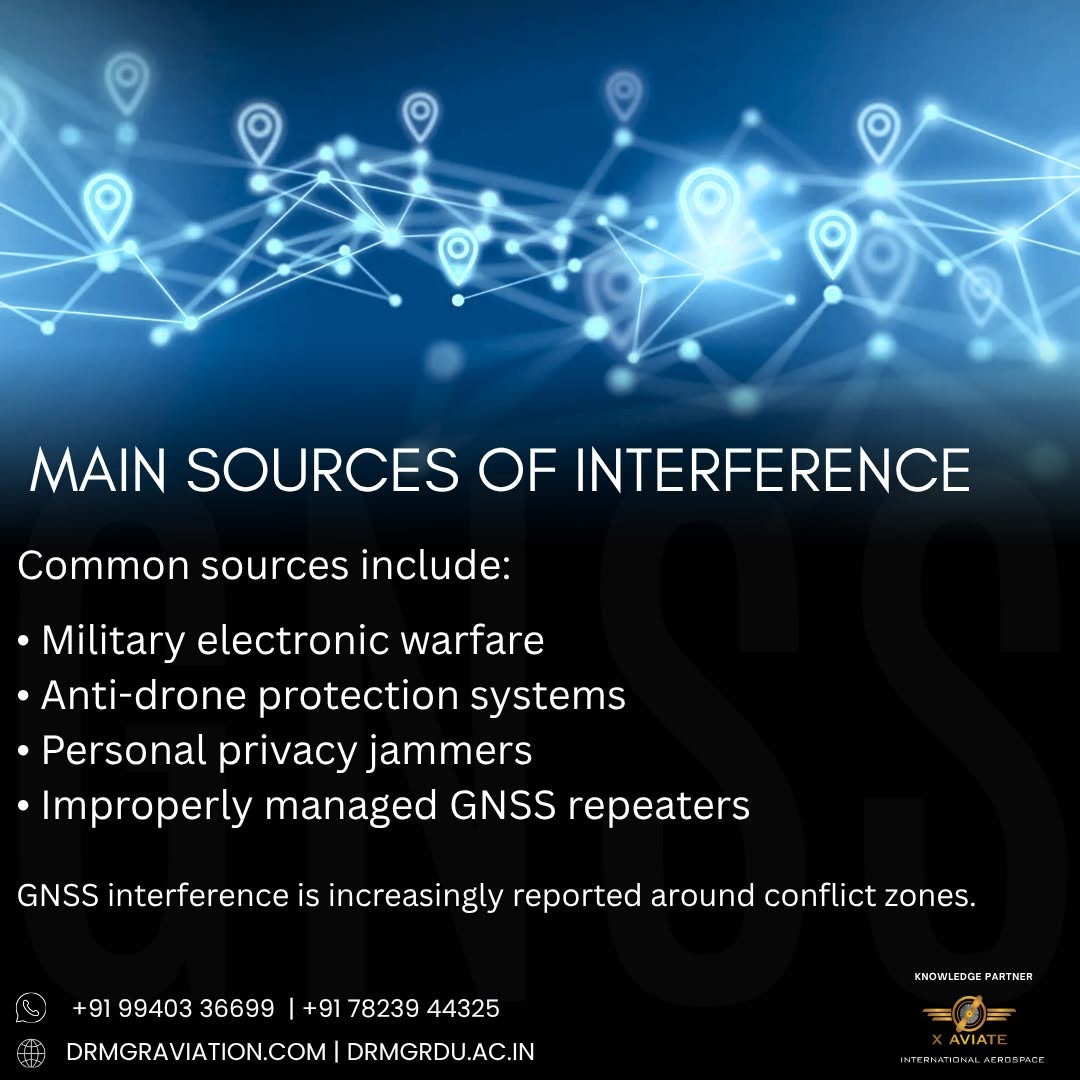
Global Navigation Satellite Systems (GNSS) serve as the absolute heartbeat of modern aviation, guiding aircraft with incredible precision across oceans, continents, and crowded terminal airspace. However, as reliance on satellite navigation deepens, so does our exposure to its inherent vulnerabilities. Recently, our official updates highlighted a critical operational challenge facing the aerospace industry: GNSS signal disruption. From military-grade electronic warfare to illegal personal privacy jammers, the signals keeping aircraft securely on their flight paths face unprecedented levels of interference.
As part of our commitment to producing industry-ready professionals, Dr MGR Aviation Academy is breaking down the physics, threats, and safety protocols surrounding GNSS vulnerabilities in a dedicated educational series. In Part 1, we examine the fundamental mechanics of satellite navigation threats, why signals traveling over 20,000 kilometers are remarkably easy to disrupt, and how modern flight decks maintain absolute safety when GPS fails.
The Core Threat: Jamming vs. Spoofing
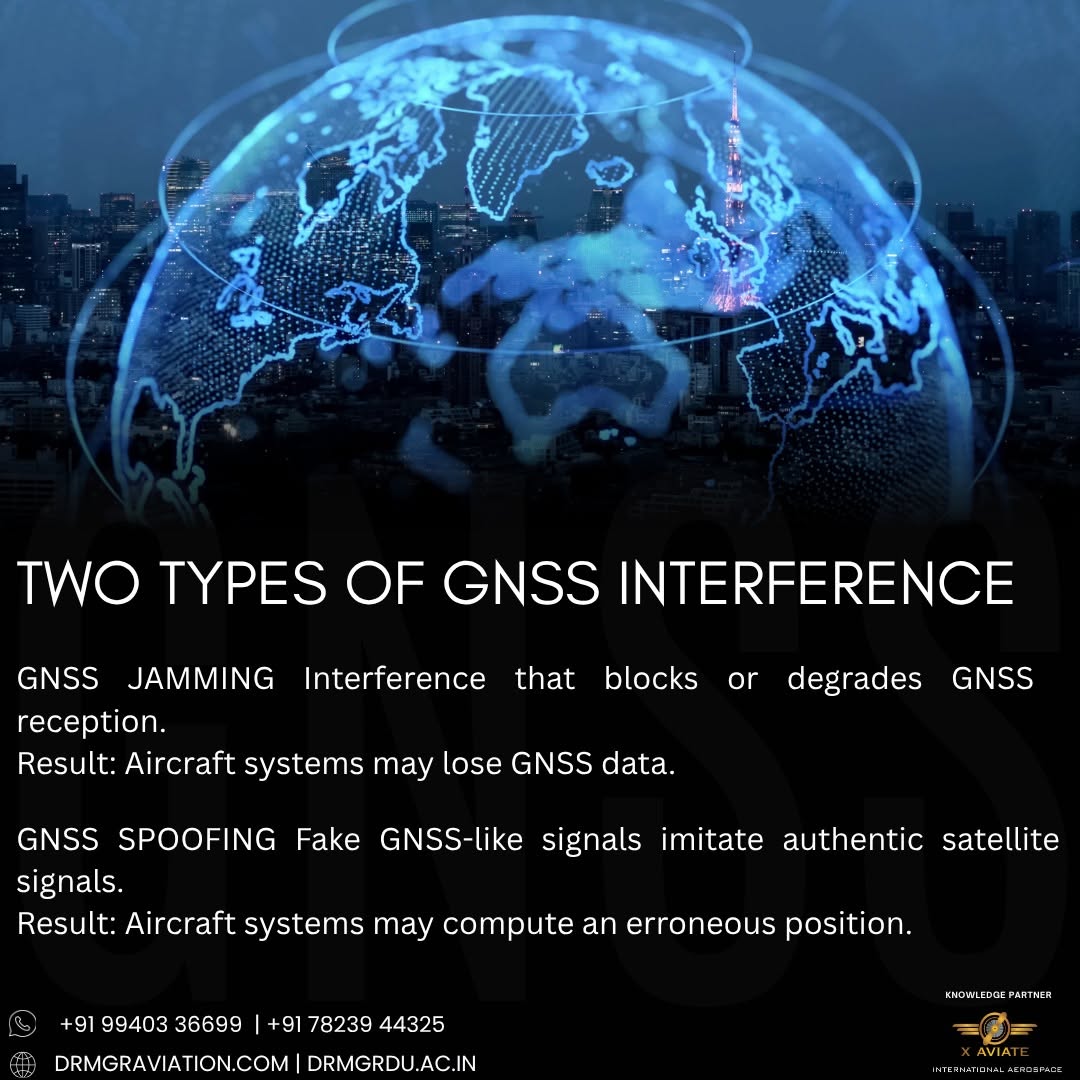
To understand modern navigation security, aviation professionals must first distinguish between the two primary forms of GNSS interference: jamming and spoofing. While both disrupt normal operations, their mechanisms and tactical implications vary significantly.
1. GNSS Jamming
Jamming is a brute-force attack. A jammer emits high-frequency radio noise on the same frequency as legitimate GNSS signals (such as the civilian L1 frequency at 1575.42 MHz). Because the jammer’s power vastly outweighs the faint satellite signal received on the ground or in the air, the aircraft receiver is simply overwhelmed. The result is a complete loss of position data, forcing the flight deck to transition to alternative navigation modes.
2. GNSS Spoofing
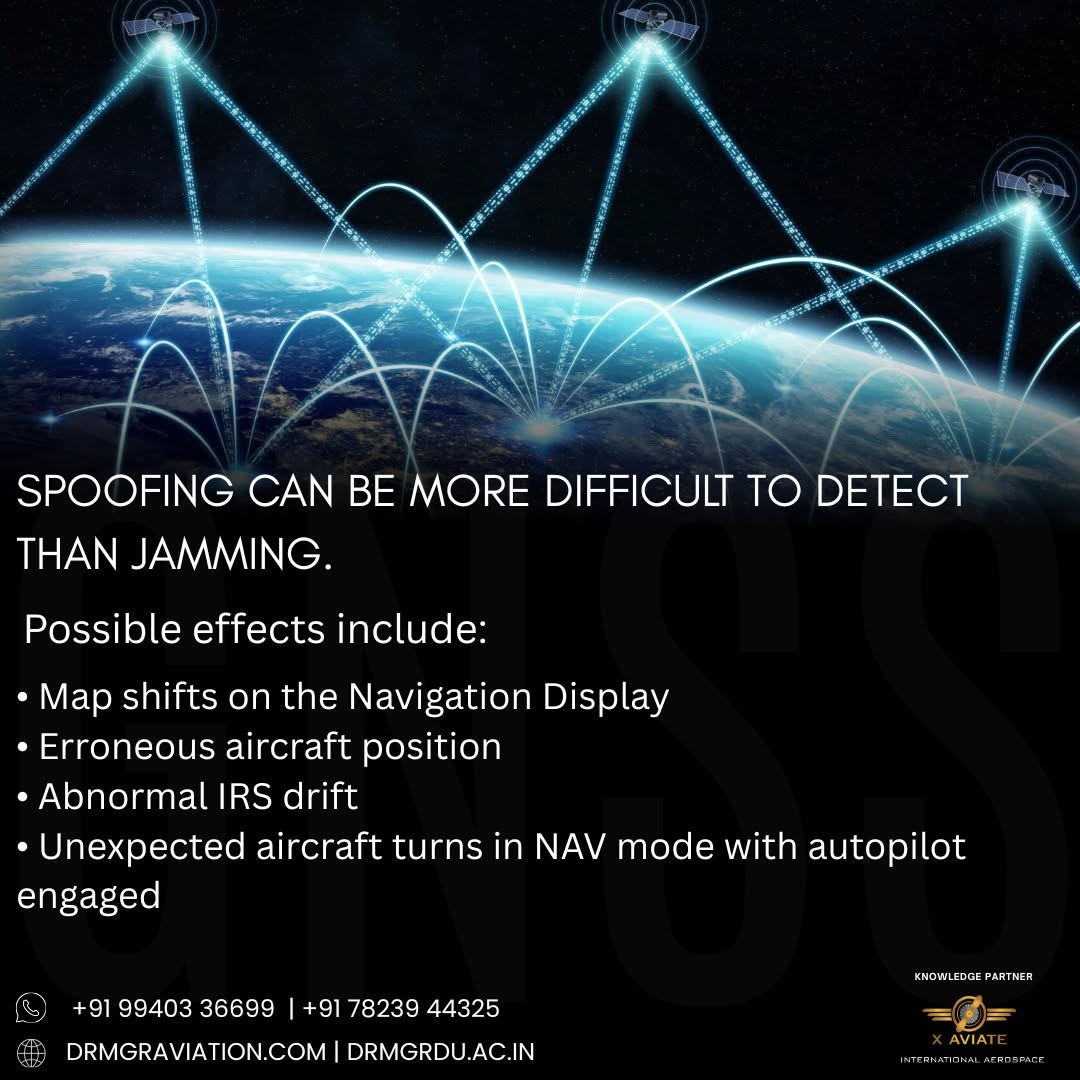
Spoofing is far more insidious. Instead of simply drowning out the satellite signal, a spoofer transmits counterfeit, synchronized radio signals that mimic authentic GNSS data. If an aircraft’s navigation system accepts these false signals, the onboard computers can be tricked into calculating an incorrect position, speed, or time. Advanced spoofing can gradually pull an aircraft off its authorized route without immediately triggering standard loss-of-signal alarms, presenting a complex challenge for situational awareness.
Why Are 20,000km Signals So Easy to Disrupt?
A common question among student aviators at Dr MGR Aviation Academy is how signals transmitted from satellites orbiting approximately 20,000 kilometers above the Earth can be intercepted or overwhelmed by small, terrestrial devices. The answer lies in the fundamental physics of radio wave propagation.
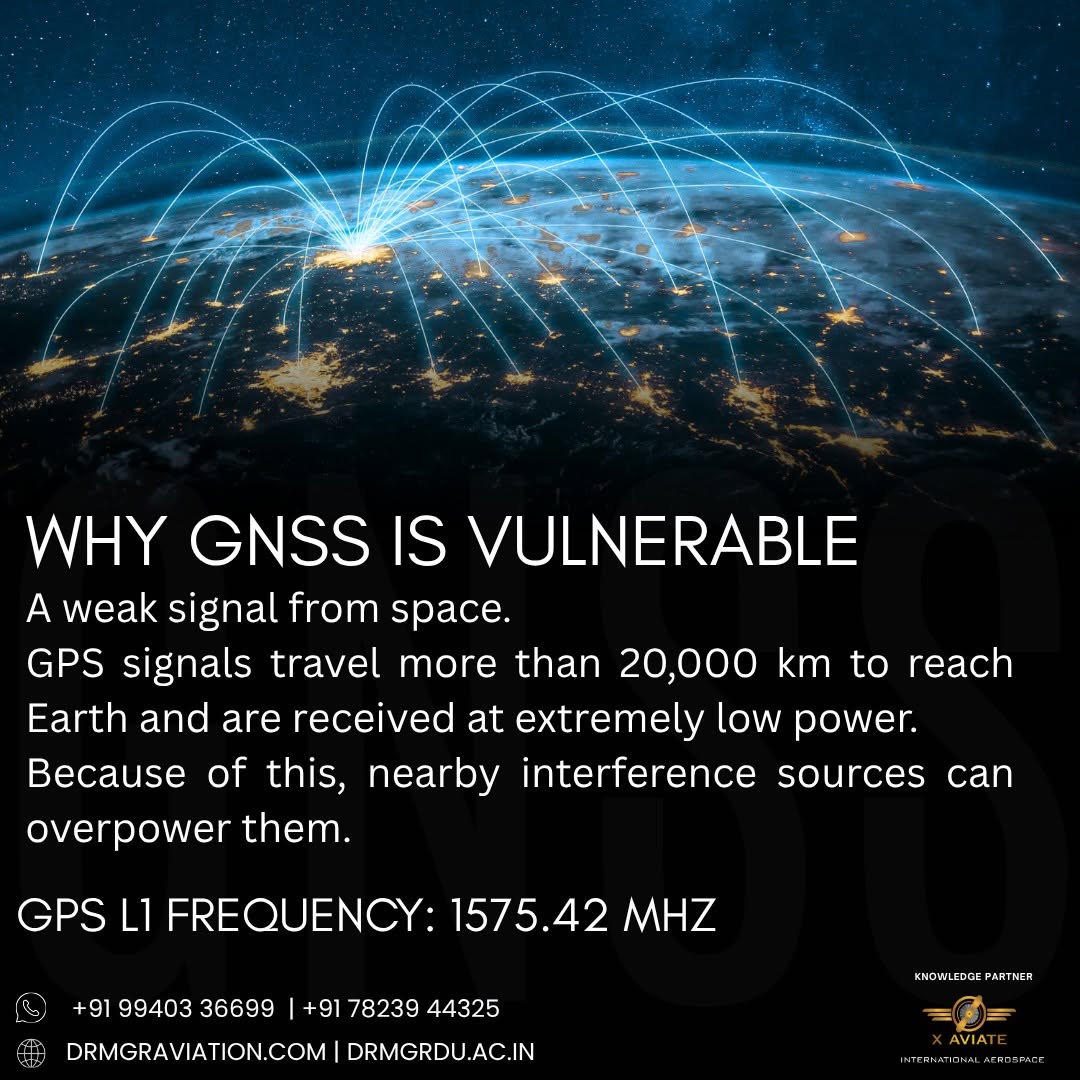
By the time a navigation signal travels 20,000 kilometers through the atmosphere and reaches an aircraft receiver, it has suffered immense free-space path loss. The resulting power level of a civilian GPS signal at the Earth’s surface is remarkably weak—roughly equivalent to viewing a 100-watt lightbulb from a distance of thousands of miles. Because the incoming signal power is exceptionally low, it requires very little radio frequency energy on the ground or in the air to override it. A small pocket-sized jammer plugged into a vehicle cigarette lighter can disrupt reception for miles around, highlighting a major regulatory and technological hurdle for civil aviation authorities globally.
Redundancy in the Cockpit: How Aircraft Stay Safe
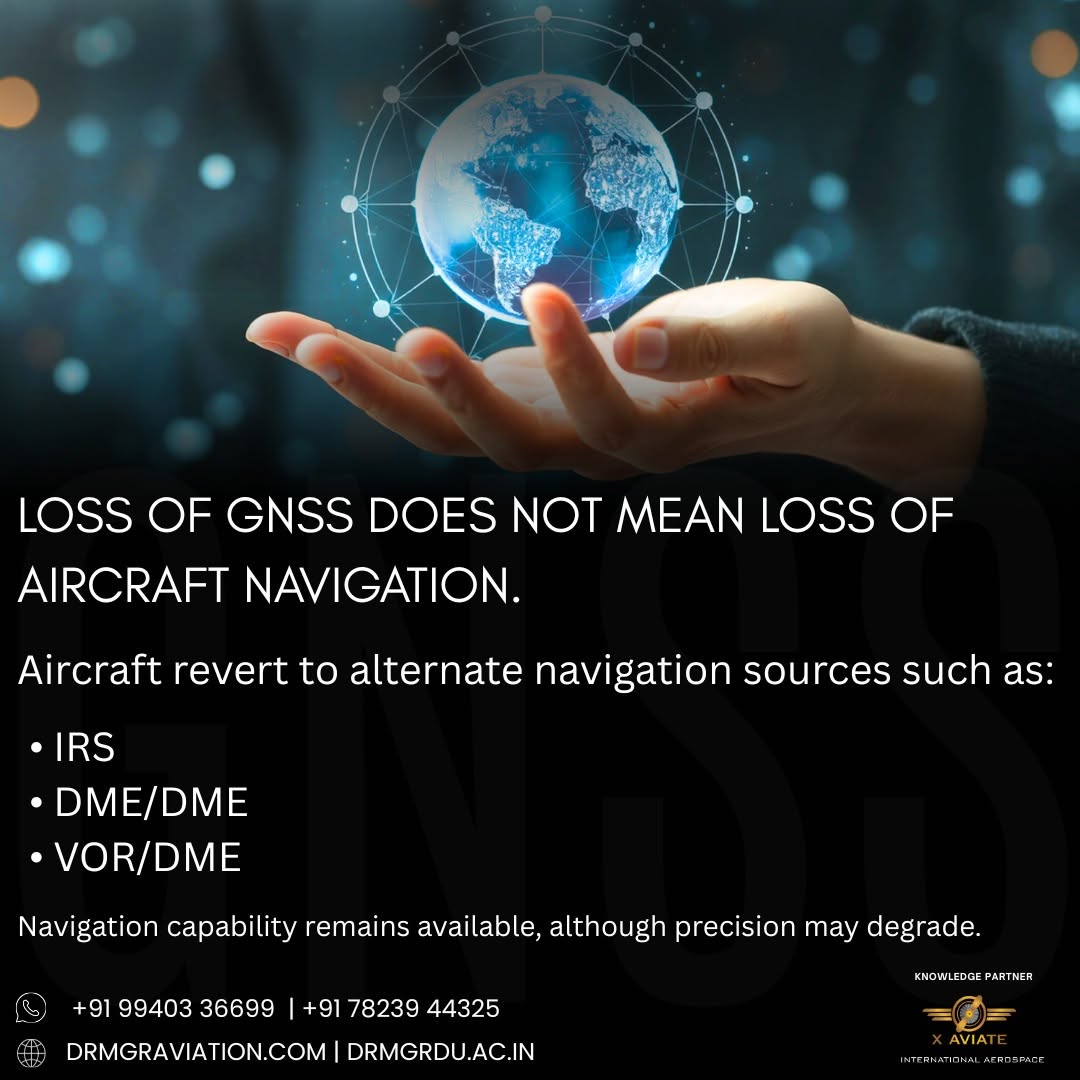
Despite the vulnerability of satellite signals, modern commercial aircraft never rely on GNSS alone. At Dr MGR Aviation Academy, our training programs emphasize the multi-layered redundancy built into modern airliners and transport category aircraft. When a GNSS failure occurs, pilots and automated flight management systems (FMS) seamlessly transition to backup systems:
- Inertial Reference Systems (IRS): Utilizing high-precision laser gyroscopes and accelerometers, the IRS calculates an aircraft’s position independently based on its motion relative to an initial known point. While subject to minor drift over long durations, IRS provides highly reliable short-term navigation data.
- Distance Measuring Equipment (DME/DME): Modern FMS units continuously cross-reference aircraft position using terrestrial VOR/DME ground stations. If GNSS is lost, DME/DME updates triangulate position with high accuracy.
- Conventional Ground-Based Navigational Aids: VORs (VHF Omnidirectional Range) and NDBs (Non-Directional Beacons) remain essential fallback solutions for route tracking and non-precision instrument approaches.
Building a Resilient Aerospace Future
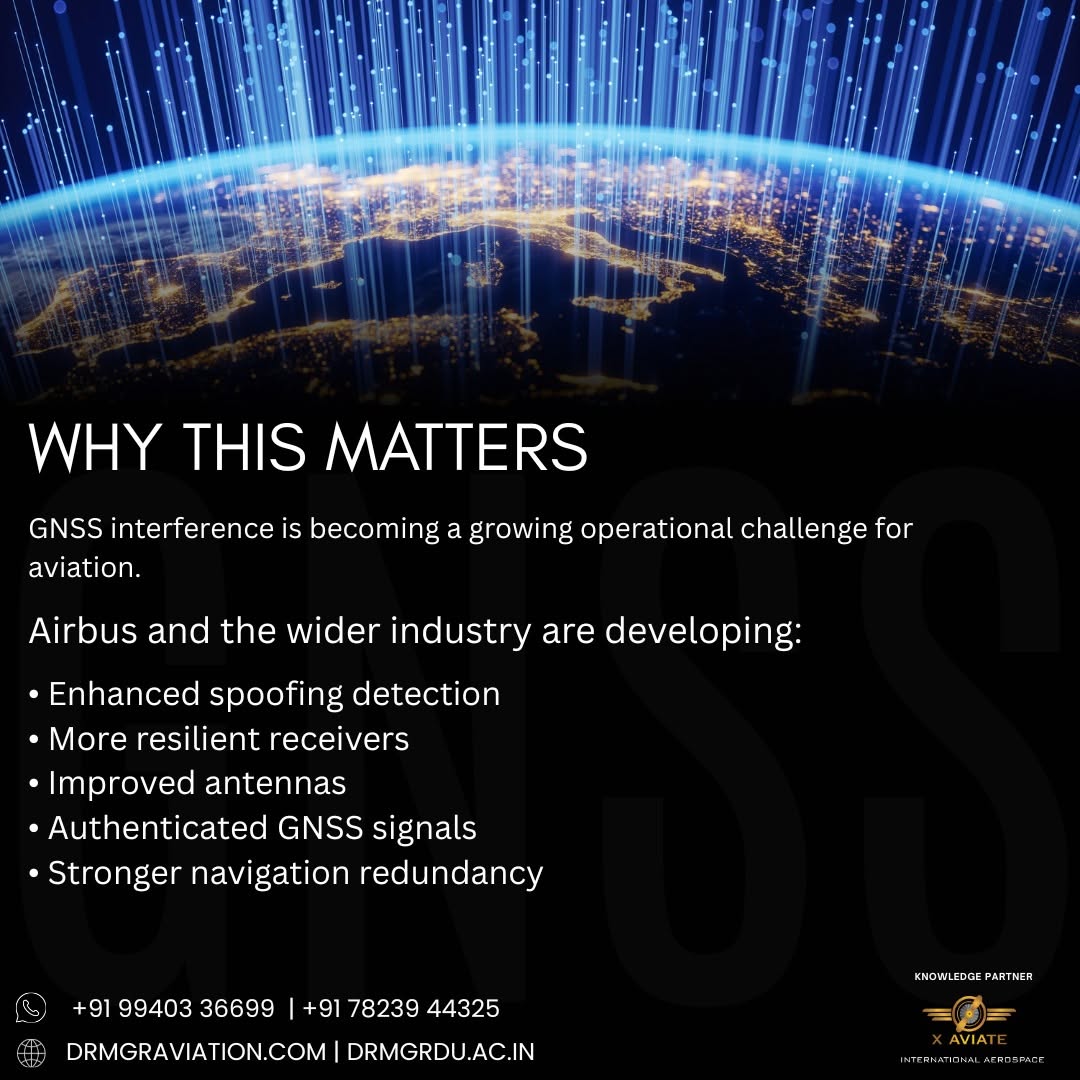
Understanding GNSS vulnerabilities is not merely an academic exercise; it is a vital competency for the next generation of pilots, air traffic controllers, and aerospace engineers. As electronic warfare tactics evolve and civilian airspace becomes increasingly congested, the industry must develop advanced anti-jam antenna designs, multi-constellation receivers, and robust alternative positioning systems.
Stay tuned for Part 2 of our series as we explore advanced mitigation strategies and the future of resilient navigation. To begin your journey in professional aviation training and management, explore the specialized courses offered at Dr MGR Aviation Academy in Chennai.
Frequently Asked Questions
What is the difference between GNSS jamming and spoofing?
Jamming is a brute-force method that overpowers legitimate satellite signals with radio noise, causing a loss of position data. Spoofing transmits counterfeit signals to trick aircraft navigation systems into accepting false position and time data.
Why are GPS signals easy to disrupt?
By the time satellite signals travel over 20,000 kilometers to reach Earth, their power level is extremely weak, making them susceptible to interference from low-power terrestrial transmitters.
How do pilots navigate if GNSS fails?
Modern aircraft use redundant systems including Inertial Reference Systems (IRS), Distance Measuring Equipment (DME/DME) triangulation, and conventional ground-based aids like VORs.
What courses does Dr MGR Aviation Academy offer?
Dr MGR Aviation Academy offers comprehensive aviation training and management courses designed to prepare students for professional careers in the global aerospace and aviation industry.