
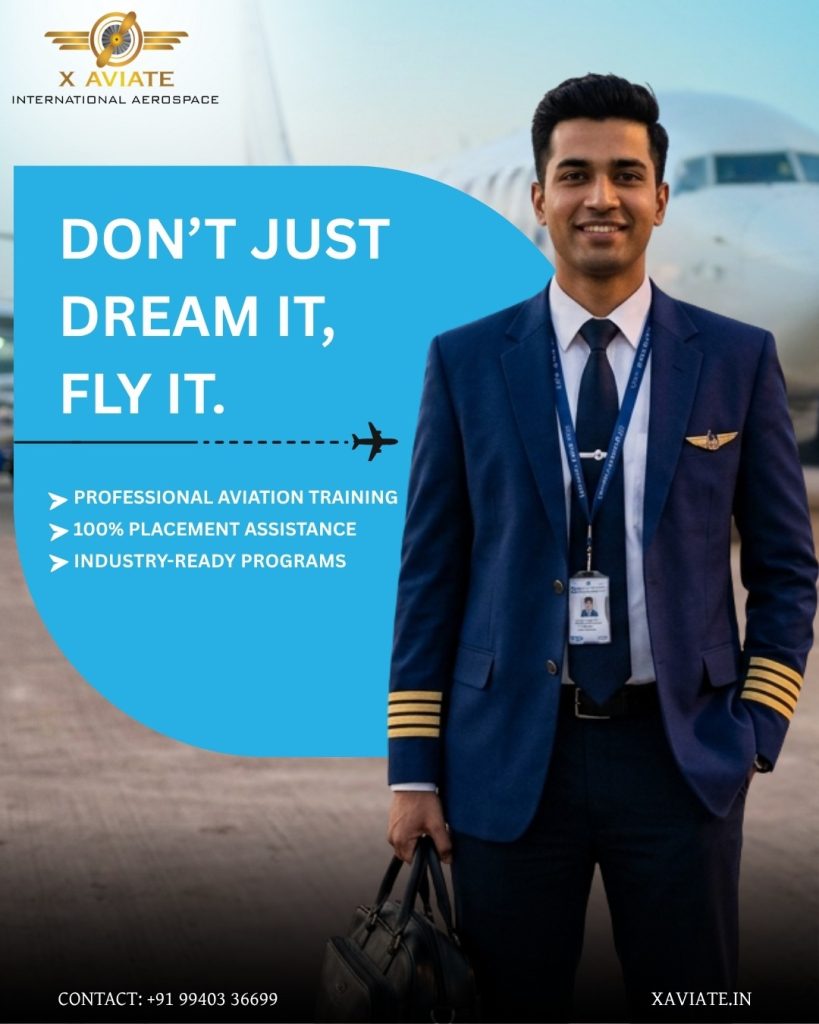
Turn Your Passion into a Profession
For many, flying is more than just a dream — it’s a lifelong ambition. The idea of wearing a pilot uniform, stepping into the cockpit, and taking control of an aircraft inspires thousands of students every year. But turning that dream into reality requires the right guidance, training, and commitment.
At X Aviate International Aerospace, aspiring aviators are given the opportunity to transform their passion into a successful career through professional aviation training programs.
What Makes X Aviate Different?
Not all aviation institutes offer the same level of training and exposure. What sets X Aviate apart is its commitment to building industry-ready professionals.
1. Professional Aviation Training
Students are trained with a focus on both theoretical knowledge and practical exposure.
2. 100% Placement Assistance
Guidance and support are provided to help students step into the aviation industry with confidence.
3. Industry-Ready Programs
Courses are designed to meet real-world aviation standards, ensuring students are prepared from day one.
Building Confidence Beyond the Classroom
Aviation is not just about technical knowledge — it’s also about communication, discipline, and decision-making. Through structured training and mentorship, students develop:
Strong communication and interpersonal skills
Confidence to handle real-time situations
Professional attitude required in aviation roles
These qualities play a crucial role in long-term career success.
Your Journey Starts with a Decision
Every pilot once started as a beginner with a dream. What makes the difference is taking that first step.
If you are passionate about aviation and ready to commit to your goals, this is the right time to begin your journey.
Conclusion
Dreaming is easy, but achieving it requires action. Aviation is a field where dedication meets opportunity. With the right training and support, you can turn your ambition into reality.
Mastering the Skies: Comprehensive Curriculum and Core Competencies
Entering the world of professional aviation demands a robust understanding of complex theoretical concepts alongside practical application. At Dr MGR Aviation Academy, our training methodology is meticulously engineered to bridge the gap between classroom instruction and real-world cockpit operations. Aspiring aviators and aviation management professionals must cultivate a multidisciplinary skill set that encompasses advanced aerodynamics, strict regulatory compliance, and sophisticated meteorology. Students delve deep into the principles of flight, aircraft systems, navigation techniques, and airspace classifications. This comprehensive academic foundation ensures that future professionals are not merely memorizing manuals, but are genuinely comprehending the operational dynamics of modern aircraft. Furthermore, students receive rigorous training in aviation safety management systems and emergency procedures, cultivating the analytical mindset required to evaluate risks and execute critical decisions under pressure. Through a balanced integration of simulator sessions and classroom lectures, trainees build the situational awareness and technical competence necessary to navigate the complexities of the global aviation sector with absolute precision and confidence.
Mapping Your Trajectory: Diverse Career Paths in Modern Aviation
The aviation industry extends far beyond the flight deck, offering a vast array of dynamic career pathways for dedicated professionals. Whether your ultimate ambition is to command commercial airliners as an airline transport pilot, coordinate complex ground operations, or manage strategic functions within airport administration, specialized training provides the essential credentials for success. Modern aviation enterprises actively seek candidates who possess both technical expertise and strategic management capabilities. Graduates of professional aviation programs frequently transition into roles such as flight dispatchers, safety inspectors, aviation logistics coordinators, and airline operations managers. Each of these positions plays an indispensable role in maintaining the seamless flow of global commerce and travel. By undertaking structured training tailored to industry standards, students position themselves to adapt to emerging trends in aerospace technology and airport infrastructure management. The versatility of an aviation education ensures that graduates can pursue fulfilling, long-term employment across commercial airlines, cargo operators, aviation regulatory bodies, and corporate flight departments, ultimately steering their professional lives toward rewarding heights.
Frequently Asked Questions
What academic background is required to begin aviation training?
Most foundational aviation programs welcome students from diverse academic backgrounds, though a strong aptitude for mathematics, physics, and English communication is highly advantageous. Prospective students should review specific course prerequisites to ensure they meet the educational benchmarks required for enrollment in advanced technical modules.
How does professional training prepare students for industry standards?
Training programs align their curriculum with contemporary global aviation standards and operational best practices. By combining theoretical coursework with practical situational exercises, students acquire the exact competencies, discipline, and procedural awareness demanded by top-tier employers in the aerospace sector.
Is prior aviation experience necessary before enrolling?
Prior flight or industry experience is generally not required for beginner-level aviation courses. Programs are specifically designed to guide complete beginners through every phase of their education, transforming foundational enthusiasm into professional capability from the ground up.