
Understanding Aircraft Leasing in Modern Aviation
For aspiring aviation professionals and management students, understanding how airlines manage their fleets is critical. Fleet expansion and management do not always involve purchasing brand new aircraft from manufacturers like Airbus or Boeing. Often, airlines rely on complex aircraft leasing agreements to manage seasonal demand, route expansion, or temporary fleet shortages. At Dr MGR Aviation Academy, we train our students to master these complex commercial and operational strategies.
As recently highlighted by Dr MGR Aviation Academy on our official social channels, aircraft leasing primarily falls into two categories: Wet Lease and Dry Lease. Let us break down how each model functions within global commercial aviation.
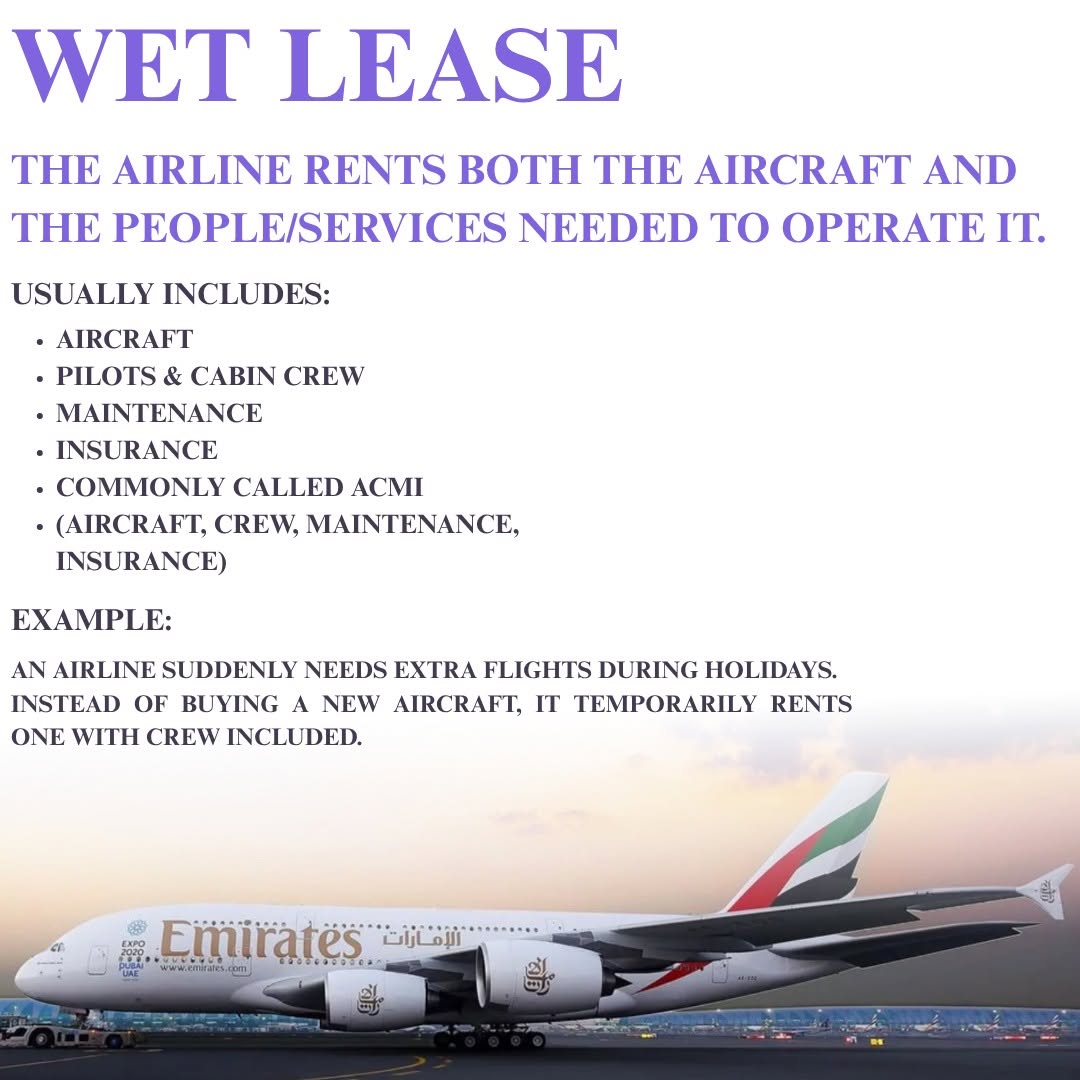
What is a Wet Lease (ACMI Leasing)?
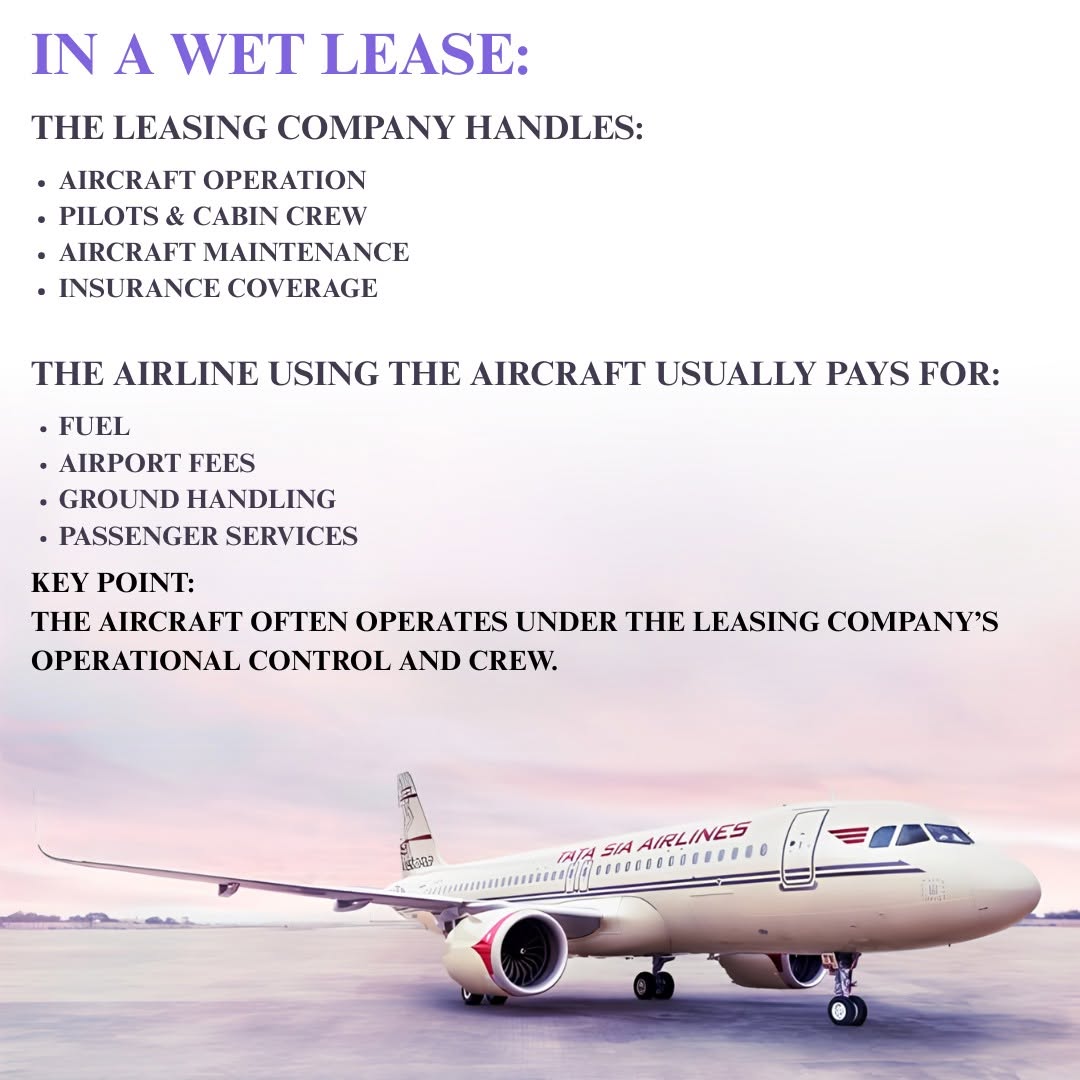
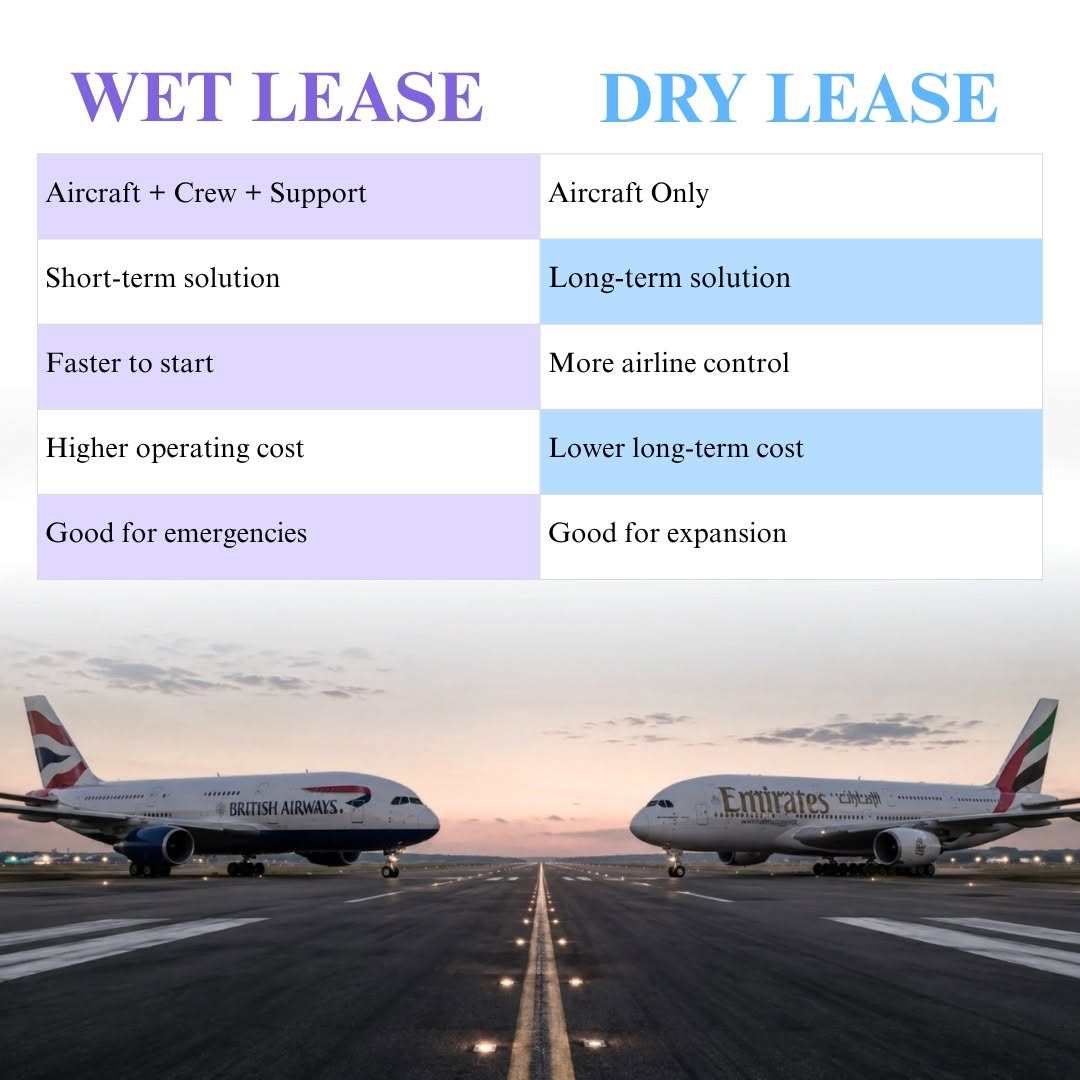
A wet lease—more formally known in the industry as an ACMI lease—stands for Aircraft, Crew, Maintenance, and Insurance. In this arrangement, the lessor provides the aircraft along with a fully qualified flight deck and cabin crew, as well as handling maintenance and insurance provisions. The lessee airline simply pays for the operation based on block hours flown.
- Speed of Deployment: Wet leases are the fastest way for an airline to introduce capacity, making them ideal for emergencies, sudden spikes in seasonal travel demand, or covering unexpected maintenance groundings.
- Reduced Operational Burden: Because the leasing provider handles crew training, regulatory compliance, and heavy maintenance, the operating airline avoids the lengthy setup time required to train new pilots and cabin crew for a specific aircraft type.
- Short-Term Focus: These agreements are typically utilized for short-term operations, ranging from a few weeks to several months.
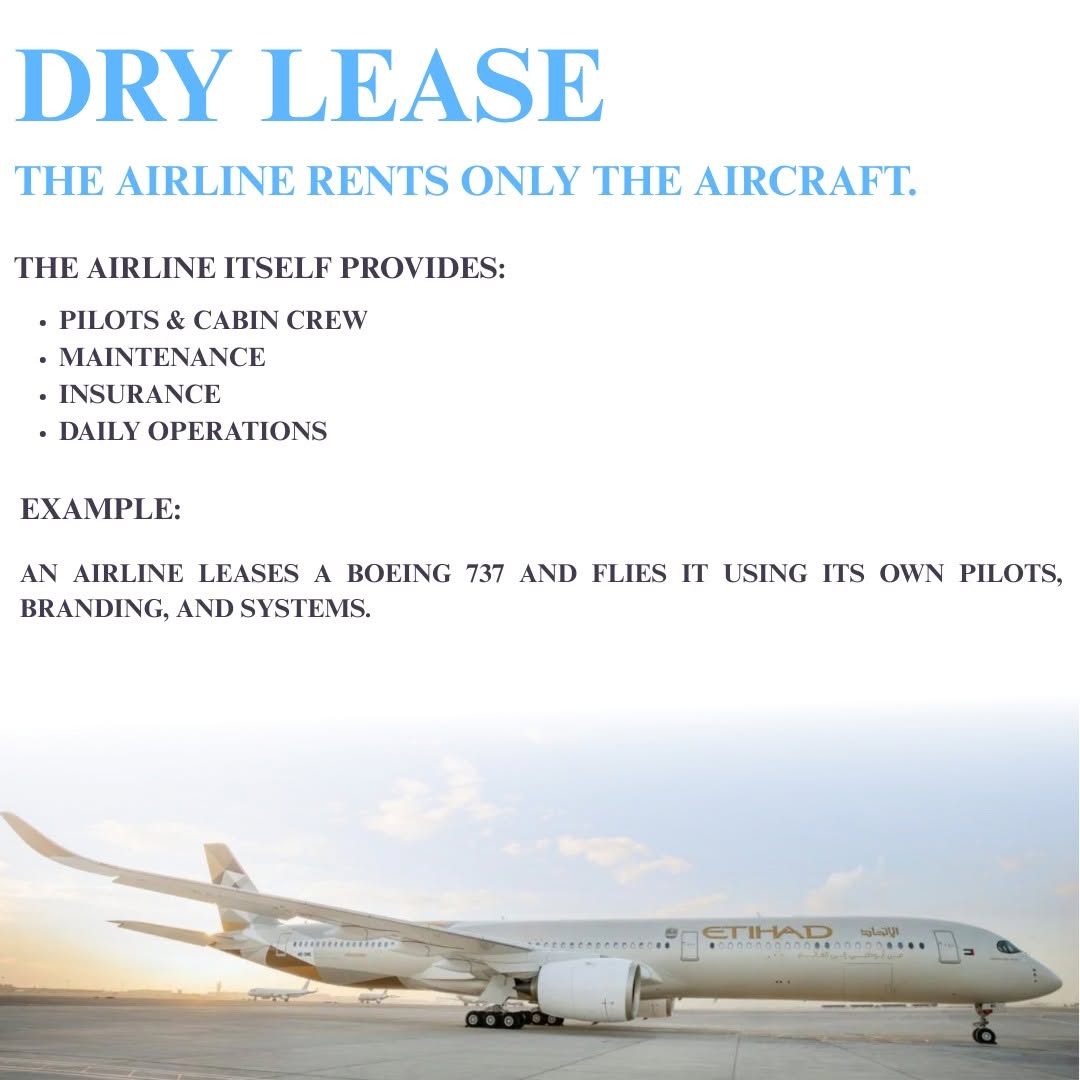
What is a Dry Lease?
Conversely, a dry lease involves the leasing of the aircraft alone—without crew, maintenance, or insurance. Under a dry lease agreement, the receiving airline places the aircraft on its own Air Operator Certificate (AOC), paints it in its corporate livery, and provides its own flight crews, cabin personnel, and maintenance schedules.
- Long-Term Strategy: Dry leases are generally structured as long-term contracts lasting several years. They serve as a cost-effective alternative to purchasing aircraft outright while allowing airlines to expand their route networks systematically.
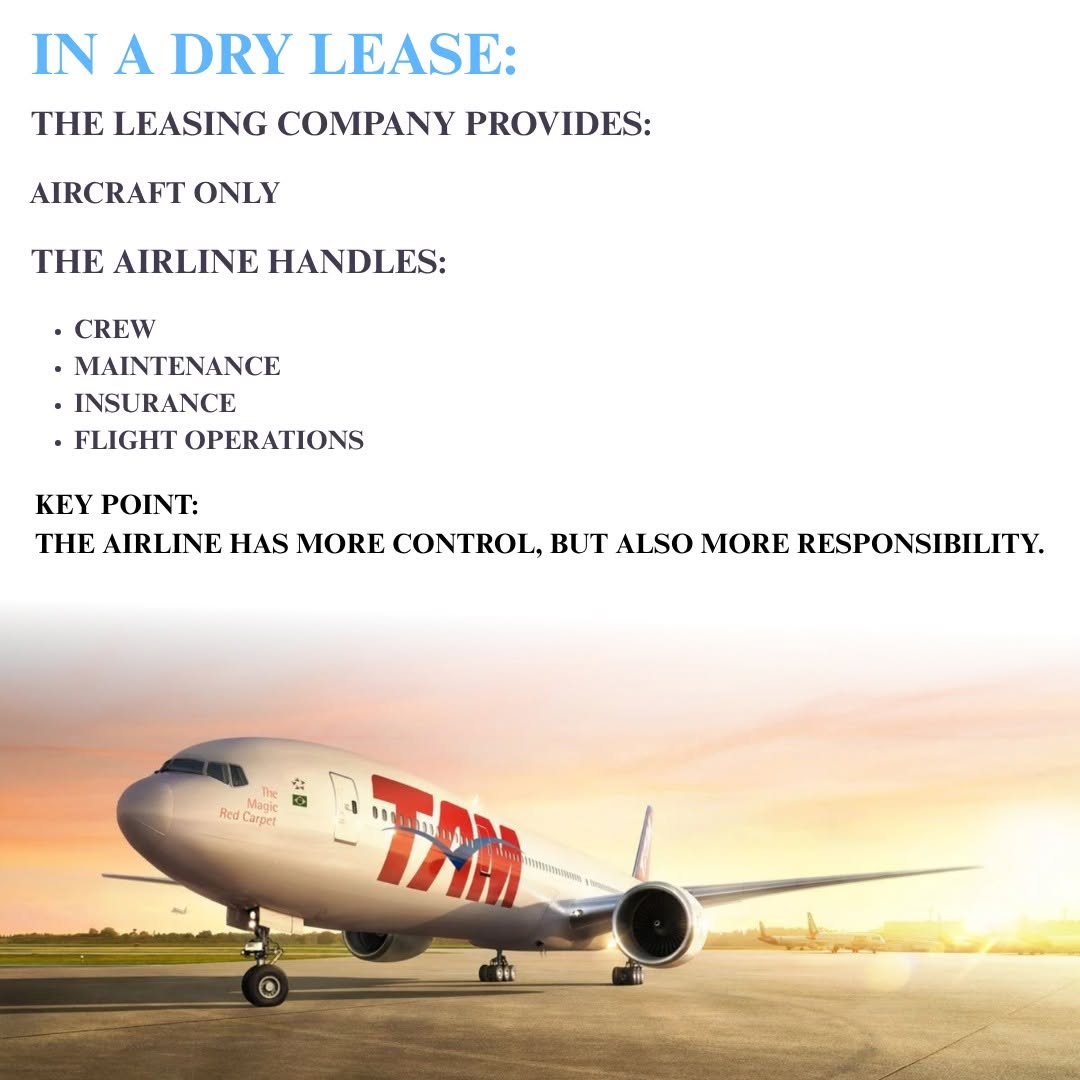
- Total Operational Control: The lessee maintains complete control over branding, flight scheduling, cabin service standards, and crew management.
- Regulatory Responsibility: The operating airline bears full responsibility for maintaining the aircraft in strict accordance with civil aviation authority regulations.
Quick Comparison: Wet Lease vs Dry Lease
To summarize the fundamental differences for aviation management students:
- Wet Lease (ACMI): A ready-to-fly solution. Includes aircraft, crew, maintenance, and insurance. Ideal for short-term and urgent capacity needs.
- Dry Lease: An airline-controlled operation. Includes the aircraft only. Ideal for long-term fleet growth and strategic expansion.
Advance Your Career with Dr MGR Aviation Academy
Grasping core industry concepts like aircraft leasing sets successful aviation management graduates apart. Whether your career aspirations point toward airport management, airline operations, or commercial aviation administration, a solid educational foundation is essential. Located in Chennai, India, the Department of Aviation at Dr. M.G.R Educational and Research Institute offers comprehensive training programs tailored to meet the dynamic needs of the global aerospace sector.
Ready to launch your professional journey? Contact our admissions team today at +91 99403 36699 or +91 78239 44325, or visit our official websites at drmgraviation.com and drmgrdu.ac.in to explore our specialized aviation training and management courses.
Frequently Asked Questions
What does ACMI stand for in aviation leasing?
ACMI stands for Aircraft, Crew, Maintenance, and Insurance, which defines a wet lease agreement where the lessor provides all these vital operational elements.
When do airlines typically use a wet lease?
Airlines utilize wet leases for short-term operations, such as handling peak travel seasons, covering unexpected aircraft maintenance, or launching temporary new routes quickly.
Who provides the crew in a dry lease agreement?
In a dry lease, the aircraft is provided without a crew. The lessee airline is responsible for supplying, training, and managing its own flight and cabin crews.
How can I study aviation management at Dr MGR Aviation Academy?
You can enroll in our specialized aviation training and management courses through the Department of Aviation at Dr. M.G.R Educational and Research Institute in Chennai. Contact us at +91 99403 36699 for admissions.