
Uniform Etiquette in Aviation: Dressing for Professional Success
In aviation, professionalism begins long before an aircraft takes off. From pilots and cabin crew to airport operations and ground-handling professionals, appearance and presentation play an important role in creating a professional environment.
Aviation is an industry where discipline, precision, and attention to detail matter. Uniform etiquette reflects these qualities and helps professionals maintain a consistent and polished appearance.
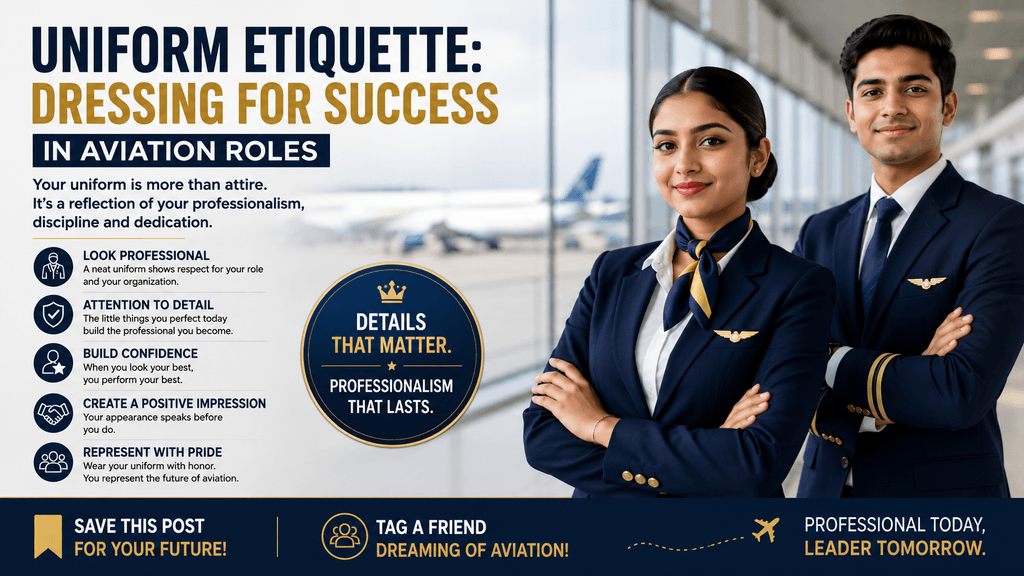
Why Does Uniform Etiquette Matter in Aviation?
A uniform is more than workwear. It represents the organization, role, and professional standards of the person wearing it.
A well-maintained uniform can communicate:
- Professionalism
- Discipline
- Attention to detail
- Confidence
- Respect for organizational standards
- Readiness for responsibility
In an industry where employees interact with passengers, colleagues, and other aviation professionals, maintaining a professional appearance can contribute to a positive workplace environment.
The Importance of a Well-Maintained Uniform
A professional aviation uniform should always look clean, neat, and properly maintained.
Important details include:
- Clean and pressed clothing
- Properly worn uniform components
- Neat footwear
- Correct placement of accessories
- Clean and professional appearance
- Appropriate identification or badges
These details may seem small, but together they contribute to an overall professional image.
Grooming and Presentation
Uniform etiquette goes hand in hand with personal grooming.
Professionals should maintain a neat appearance that complements their uniform and workplace responsibilities.
Good grooming demonstrates attention to detail and helps create confidence when interacting with passengers and colleagues.
First Impressions Matter
In aviation, professionals often interact with people within seconds of meeting them.
A polished appearance can help create a positive first impression.
Whether working at an airport terminal, airline office, check-in counter, or onboard an aircraft, professional presentation supports effective communication and customer interaction.
Uniform Etiquette Is About More Than Appearance
Professionalism is not limited to clothing.
Aviation professionals should combine a polished appearance with:
- Good communication
- Positive body language
- Punctuality
- Courtesy
- Teamwork
- Responsibility
- Safety awareness
A professional uniform becomes more meaningful when it is supported by professional behaviour.
Building Professional Habits Early
Developing good uniform and grooming habits during aviation education can help students become comfortable with professional standards.
Small habits such as checking your appearance before entering a professional environment can gradually become part of your daily routine.
Final Thoughts
In aviation, details matter.
A clean uniform, neat grooming, confident posture, and professional attitude can collectively create a strong professional image.
Uniform etiquette is therefore not simply about looking good. It is about demonstrating the discipline, respect, and attention to detail expected in a professional aviation environment.
Professionalism starts with the details – and those details begin with you.