
Aviation training is exciting, challenging, and rewarding but it can also be demanding. Students preparing for aviation careers have to manage academics, technical subjects, practical training, examinations, schedules, and the expectations that come with entering a safety-focused industry.
Learning how to manage stress is therefore an important part of becoming a confident and professional aviation student.
The goal is not to eliminate every stressful situation. Instead, students can learn practical ways to manage pressure, maintain focus, and build healthy routines throughout their aviation training journey.
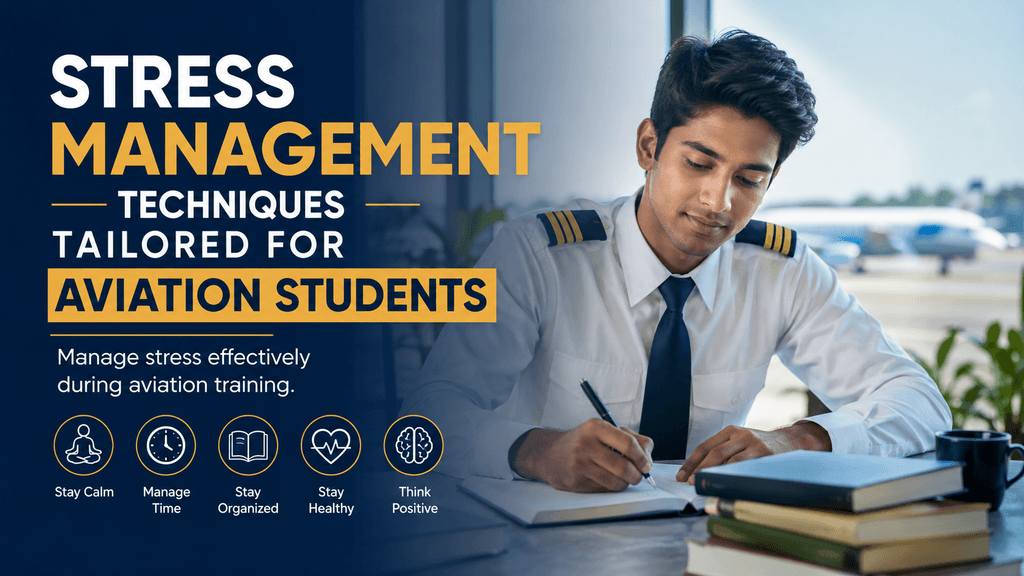
Why Can Aviation Training Feel Stressful?
Aviation education involves more than simply learning how an aircraft operates. Students may need to understand subjects such as aviation regulations, navigation, meteorology, aircraft systems, safety procedures, communication, and human factors.
At the same time, students may be preparing for examinations, practical sessions, presentations, assignments, or future aviation career requirements.
Common sources of pressure can include:
- Heavy academic workloads
- Examination preparation
- Practical training schedules
- Learning technical aviation concepts
- Managing multiple assignments
- Fear of making mistakes
- Maintaining concentration during training
- Balancing academics with personal responsibilities
- Career expectations and future planning
Recognising these sources of stress is the first step toward managing them effectively.
1. Build a Realistic Training Schedule
One of the simplest ways to reduce unnecessary pressure is to organise your day.
Instead of trying to complete everything at once, divide your responsibilities into manageable tasks.
For example:
Morning: Review important concepts
College hours: Focus on classes and practical learning
Evening: Revision / assignments
Night: Prepare for the next day and relax
A realistic schedule should include study time, breaks, meals, physical activity, and adequate sleep.
The objective is not to create a schedule that fills every minute of the day. It is to create a routine that helps you stay consistent.
2. Priorities Your Tasks
Not every task has the same level of importance.
Try categorising your responsibilities into:
High priority: Exams, practical training, important assignments
Medium priority: Regular revision and coursework
Low priority: Tasks that can be completed later
Completing high-priority tasks first can prevent last-minute pressure.
A simple daily question can help:
“What are the three most important things I need to complete today?”
Focus on those before moving to less important tasks.
3. Break Large Tasks Into Smaller Steps
A large syllabus or difficult aviation topic can feel overwhelming when viewed as one task.
Instead, break it down.
For example, rather than writing:
“Study Aviation Navigation”
create smaller goals:
- Revise basic navigation concepts
- Study charts and symbols
- Review important terminology
- Practise related questions
- Test your understanding
Small, achievable steps can make difficult subjects feel more manageable and help you track your progress.
4. Take Short, Meaningful Breaks
Continuous studying does not always mean better learning.
After a focused study period, take a short break. Step away from your screen or books, stretch, walk around, drink water, or simply give your mind a few minutes to reset.
The purpose of a break is to return to your work with better concentration, rather than spending the entire break scrolling through social media.
5. Maintain Healthy Sleep Habits
Sleep plays an important role in learning, concentration, memory, and daily performance.
For aviation students, staying alert and focused is particularly important because training involves technical knowledge and safety-oriented procedures.
Try to maintain a consistent sleep schedule and avoid regularly sacrificing sleep to complete last-minute work.
Good preparation starts with a well-rested mind.
6. Stay Physically Active
Physical activity can be a useful part of a balanced student routine.
You do not necessarily need an intensive workout every day. Walking, stretching, sports, yoga, or other suitable physical activities can help you take a break from academic work and maintain an active lifestyle.
Even a short walk between study sessions can provide a useful mental reset.
7. Avoid Comparing Your Progress With Others
Every aviation student has a different learning pace.
One student may understand a technical subject quickly, while another may need additional practice. Someone else may feel confident during presentations while you are still developing that skill.
Comparing yourself constantly with others can add unnecessary pressure.
Instead, compare your current performance with your own previous progress.
Ask:
- What did I learn this week?
- What skill have I improved?
- Which topic do I need to practise more?
- What can I do better next time?
Progress is still progress, even when it happens gradually.
8. Ask for Help When You Need It
Trying to handle every challenge alone can make academic pressure feel heavier.
If you are struggling with a subject or training concept, speak with your faculty members, instructors, mentors, or classmates.
Asking questions is not a sign of weakness. It is part of learning.
A strong aviation professional should be comfortable recognising knowledge gaps and taking the appropriate steps to improve them.
9. Practise Calm and Focused Preparation
Before an examination, presentation, or practical session, avoid last-minute panic wherever possible.
Instead:
Prepare → Practise → Review → Rest
For technical subjects, active learning can be more useful than simply reading the same material repeatedly.
Try:
- Practice questions
- Flashcards
- Concept maps
- Group discussions
- Mock tests
- Explaining a topic to someone else
The more familiar you become with the material, the more confident you may feel when applying it.
10. Create a Healthy Digital Routine
Digital devices are useful for aviation students, but constant notifications can make it difficult to concentrate.
During focused study sessions:
- Turn off unnecessary notifications
- Keep distracting apps closed
- Use your phone only when required
- Set specific times for social media
- Avoid excessive screen use before sleep
Creating boundaries with technology can help protect your study time and attention.
11. Remember That Rest Is Part of Preparation
There can be a tendency among ambitious students to believe that working continuously means being more productive.
But effective preparation also requires recovery.
Take time to:
- Spend time with family and friends
- Enjoy hobbies
- Take a walk
- Listen to music
- Relax
- Get adequate sleep
Rest is not wasted time. It helps you return to training with renewed focus.
Building a Professional Mindset
Stress management is not only about feeling comfortable during college. It can also help students develop professional habits that are valuable in aviation.
Aviation professionals are expected to communicate effectively, remain focused, follow procedures, manage responsibilities, and make sound decisions.
Developing healthy routines during training can help students build these habits early.
The objective is not to become someone who never experiences pressure.
It is to become someone who knows how to respond to pressure responsibly and effectively.
When Should You Seek Additional Support?
Everyone experiences challenging periods. However, if stress begins to significantly interfere with your daily life, studies, sleep, relationships, or ability to function, it is important to speak with a trusted person or an appropriate professional for support.
Seeking support early can be a positive step toward maintaining your overall well-being.
Final Thoughts
Aviation training requires discipline, concentration, consistency, and resilience.
Managing stress effectively can help students approach their studies with a clearer and more balanced mindset.
Remember:
Plan your training.
Priorities your responsibilities.
Take meaningful breaks.
Look after your well-being.
Ask for help when necessary.
Keep improving one step at a time.
Your aviation journey is not only about reaching the cockpit. It is also about developing the knowledge, discipline, confidence, and professional mindset needed to succeed in the aviation industry.