
Understanding Aerodynamics at Dr MGR Aviation Academy
At Dr MGR Aviation Academy, situated in Chennai, India, mastering the fundamental laws of physics is the bedrock of every successful aviation career. While aspiring commercial pilots, flight dispatchers, and aeronautical engineers spend countless hours studying complex flight decks and turbine engines, the core science governing flight is surprisingly universal. In fact, an intriguing parallel can be drawn between the movement of a modern aircraft in the sky and a J80 sailboat navigating the open water. Both systems rely on identical fluid dynamics to achieve motion, stability, and precise control.
When students enroll in our comprehensive aviation training and management courses, they quickly learn that air and water are both fluids. The physical laws governing airflow over a cambered surface apply just as effectively to a fabric sail cutting through a sea breeze as they do to an aluminum wing soaring through the troposphere. Recognizing these foundational similarities enhances a student’s intuitive grasp of lift, drag, thrust, and weight.
The Parallels Between Aircraft Wings and Sailboat Sails
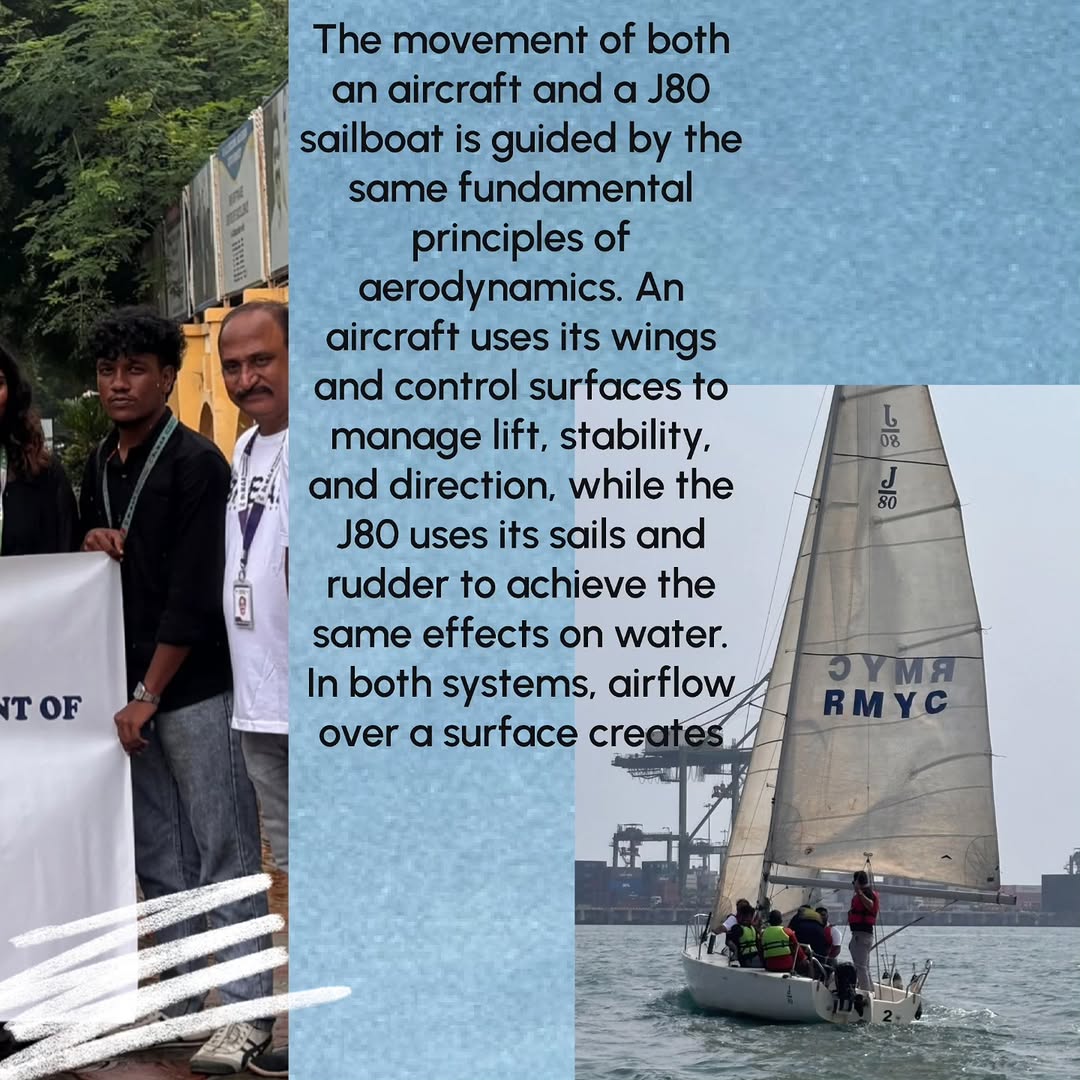
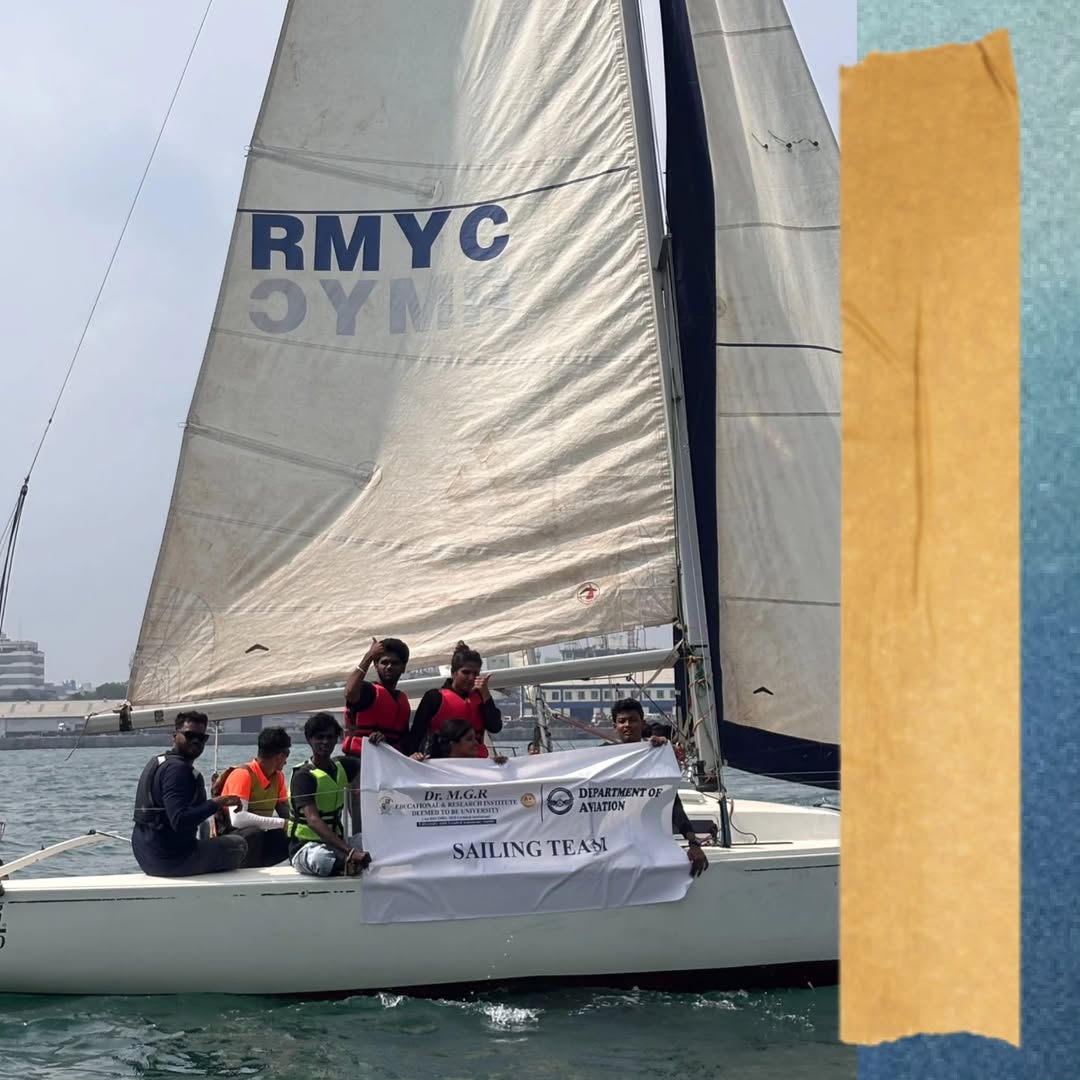
To the untrained observer, a soaring aircraft and a racing sailboat appear to operate in completely different realms. However, from an aerodynamic perspective, a sail functions precisely like a vertical wing. When wind flows across the contours of a J80 sailboat’s sail, it creates a pressure differential. The windward side experiences higher pressure, while the leeward side experiences lower pressure, generating a force vector that pulls the boat forward—much like the lift generated by an aircraft wing.
At Dr MGR Aviation Academy, we emphasize practical, hands-on learning that bridges theoretical physics with real-world application. Whether you are studying aerodynamics for a commercial pilot license or preparing for rigorous checkride scenarios, understanding how pressure differentials dictate movement is vital. Just as an aircraft utilizes its wings to generate the lift necessary to overcome gravity, a sailboat utilizes its sails to harness wind energy and generate forward propulsion across the water’s surface.
Control Surfaces and Maneuverability
Achieving motion is only the first step; maintaining precise control is what separates an average operator from a master aviator. In aviation, control surfaces such as ailerons, elevators, and rudders allow pilots to execute banks, climbs, descents, and coordinated turns. These small, deliberate adjustments dictate the stability and direction of the aircraft.
Similarly, a J80 sailboat relies on sail trim and the rudder to achieve the exact same operational effects. Consider the following mechanical parallels:
- Ailerons and Sail Trim: Adjusting an aileron changes the camber and lift profile of an aircraft wing, inducing a roll. Adjusting the trim of a sail alters its aerodynamic profile, optimizing the lift-to-drag ratio for maximum propulsion.
- Rudders and Directional Stability: In both systems, the rudder acts as the primary yaw control. Whether submerged in water or operating in a slipstream, the rudder allows the operator to counteract external forces and maintain a true heading.
- Balance and Feedback: Both pilots and helmsmen must constantly monitor tactile feedback through the controls, making micro-adjustments to maintain equilibrium in shifting atmospheric or aquatic conditions.
These comparisons highlight why comprehensive aviation education must go beyond rote memorization. At Dr MGR Aviation Academy, our curriculum is designed to foster critical thinking, spatial awareness, and deep analytical skills.
Preparing the Next Generation of Aviators in Chennai
The aviation industry in India and across the globe is expanding at an unprecedented rate. Airlines demand highly trained professionals who possess not only technical certifications but also a profound, intuitive understanding of flight dynamics. From flight operations to advanced aeronautical management, Dr MGR Aviation Academy provides the rigorous training environment required to thrive in this competitive sector.
By breaking down complex aerospace concepts into relatable physical principles—such as comparing aircraft wings to sailboat sails—our expert faculty ensures that students build a rock-solid foundation. This educational approach prepares our graduates for successful pilot pathways, flight dispatch roles, and upper-management positions within the global aviation ecosystem.
Advance Your Career with Dr MGR Aviation Academy
If you are passionate about building a professional career in aviation, choosing the right training academy is the most critical decision you will make. Dr MGR Aviation Academy in Chennai combines world-class infrastructure, experienced industry mentors, and a robust curriculum focused on safety, operational excellence, and technical mastery.
Step into the future of flight with confidence. Master the principles of aerodynamics, hone your operational decision-making, and earn your wings with an institution dedicated to shaping elite aviation professionals. Contact our admissions team today to learn more about our specialized aviation training and management courses.
Frequently Asked Questions
What courses does Dr MGR Aviation Academy offer?
Dr MGR Aviation Academy offers a comprehensive range of aviation training and management courses designed to prepare students for careers as pilots, flight operations specialists, and aviation managers.
Where is Dr MGR Aviation Academy located?
Dr MGR Aviation Academy is located in Chennai, India, providing state-of-the-art facilities and expert instruction for aspiring aviation professionals.
Why is the study of aerodynamics important in flight training?
Aerodynamics is fundamental to understanding how lift, drag, thrust, and weight interact, allowing pilots and aviation professionals to safely control and maneuver aircraft.
How do aircraft wings and sailboat sails compare aerodynamically?
Both aircraft wings and sailboat sails act as airfoils that create pressure differentials when air flows over them, generating the forces necessary for motion and directional control.