
The aviation industry continues to grow rapidly, creating exciting career opportunities for aspiring pilots around the world. If you dream of flying commercial aircraft and building a successful career in aviation, earning a Commercial Pilot License (CPL) is the first and most important step.
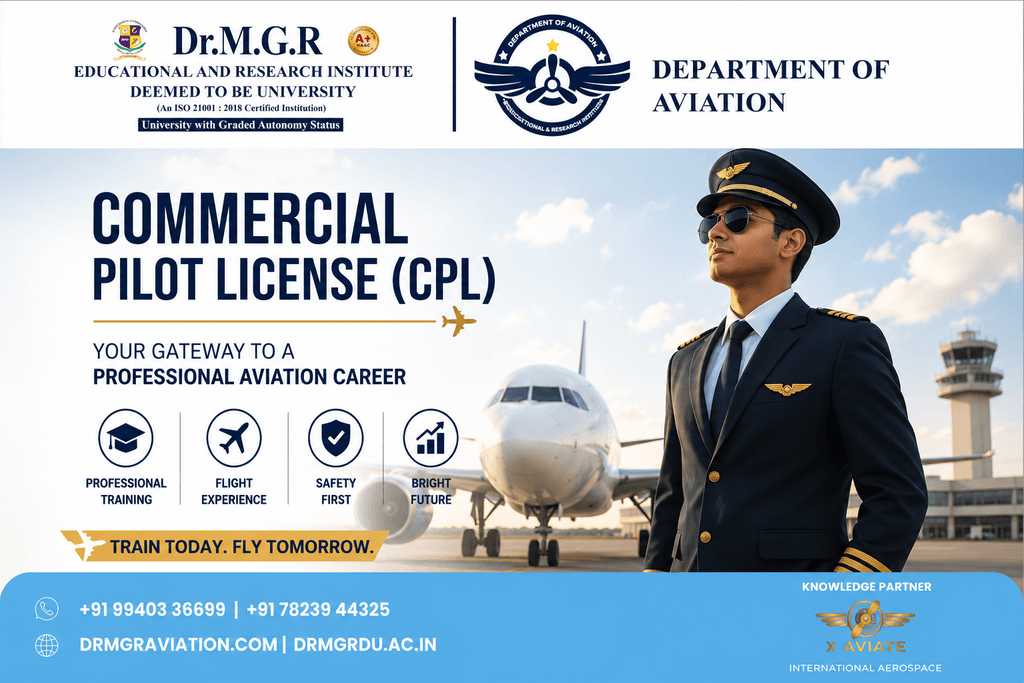
A Commercial Pilot License is a professional certification that allows pilots to operate aircraft for compensation or hire. It is the foundation for becoming an airline pilot, charter pilot, cargo pilot, or corporate pilot.
What is a Commercial Pilot License (CPL)?
A Commercial Pilot License (CPL) is issued by the aviation regulatory authority after a candidate successfully completes the required flight training, theoretical examinations, and practical flight tests.
Unlike a Private Pilot License (PPL), a CPL enables pilots to work professionally in the aviation industry and receive payment for their flying services.
Eligibility for a Commercial Pilot License
To pursue a Commercial Pilot License, candidates generally should:
- Complete Higher Secondary Education (10+2) with Physics and Mathematics.
- Meet the minimum age requirement specified by the aviation authority.
- Hold a valid Class I Medical Certificate.
- Demonstrate proficiency in English communication.
- Successfully complete the required ground school and flight training.
Meeting these requirements is the first step toward a rewarding aviation career.
Subjects Covered During CPL Training
Commercial Pilot training combines theoretical knowledge with practical flight experience. Students typically learn:
- Principles of Flight
- Air Navigation
- Aviation Meteorology
- Air Regulations
- Aircraft Technical General
- Aircraft Technical Specific
- Flight Planning
- Radio Telephony Procedures
- Human Performance and Limitations
- Aviation Safety
- Emergency Procedures
These subjects help students develop the technical knowledge and decision-making skills required for professional flying.
Flight Training
One of the most exciting aspects of CPL training is hands-on flight experience. During training, students learn:
- Aircraft Pre-flight Inspection
- Taxiing Procedures
- Take-off Techniques
- Climbing and Descending
- Navigation Flights
- Cross-country Flying
- Night Flying
- Instrument Flying
- Emergency Handling
- Precision Landing Techniques
Flight instructors guide students through every stage of training to build confidence and competence.
Skills Every Commercial Pilot Needs
Successful commercial pilots possess a combination of technical expertise and personal qualities, including:
- Strong Decision-Making Skills
- Excellent Communication
- Situational Awareness
- Leadership
- Problem-Solving Ability
- Discipline and Professionalism
- Teamwork
- Stress Management
- Safety Awareness
These skills are essential for operating aircraft safely and efficiently.
Career Opportunities After CPL
A Commercial Pilot License opens the door to numerous career opportunities in the aviation industry.
Career options include:
- Airline Pilot
- First Officer
- Charter Pilot
- Cargo Pilot
- Corporate Jet Pilot
- Flight Instructor
- Air Ambulance Pilot
- Aerial Survey Pilot
- Government Aviation Services
- Aviation Training Organizations
With additional experience and ratings, pilots can progress to become Airline Captains and Commanders.
Why Choose a Career as a Commercial Pilot?
A career in aviation offers numerous advantages:
- Excellent Career Growth
- Competitive Salary Packages
- International Career Opportunities
- Professional Recognition
- Opportunity to Travel Worldwide
- Advanced Aircraft Technology
- Continuous Learning
- Dynamic Work Environment
Commercial pilots enjoy one of the most respected professions in the world.
The Future of Commercial Aviation
The global aviation sector continues to expand, increasing the demand for qualified commercial pilots. Airlines are introducing new aircraft, expanding routes, and recruiting skilled professionals to meet growing passenger demand.
This makes it an ideal time for students to pursue Commercial Pilot training and prepare for a successful future in aviation.
Begin Your Aviation Journey
At Dr. M.G.R. Educational and Research Institute – Department of Aviation, students receive industry-oriented aviation education that builds a strong foundation for careers in commercial aviation, airport operations, airline management, and aviation safety.
With experienced faculty, practical learning, and industry exposure, students are prepared to achieve their aviation career goals.
Conclusion
A Commercial Pilot License (CPL) is much more than a certification—it is the gateway to an exciting and rewarding aviation career. Through comprehensive theoretical knowledge, professional flight training, and a commitment to safety, aspiring pilots can transform their passion for flying into a successful profession.
Whether your dream is to fly domestic airlines, international carriers, cargo aircraft, or corporate jets, obtaining a Commercial Pilot License is the first step toward reaching new heights.
Take Off Towards Your Dream Career. Become a Commercial Pilot.