
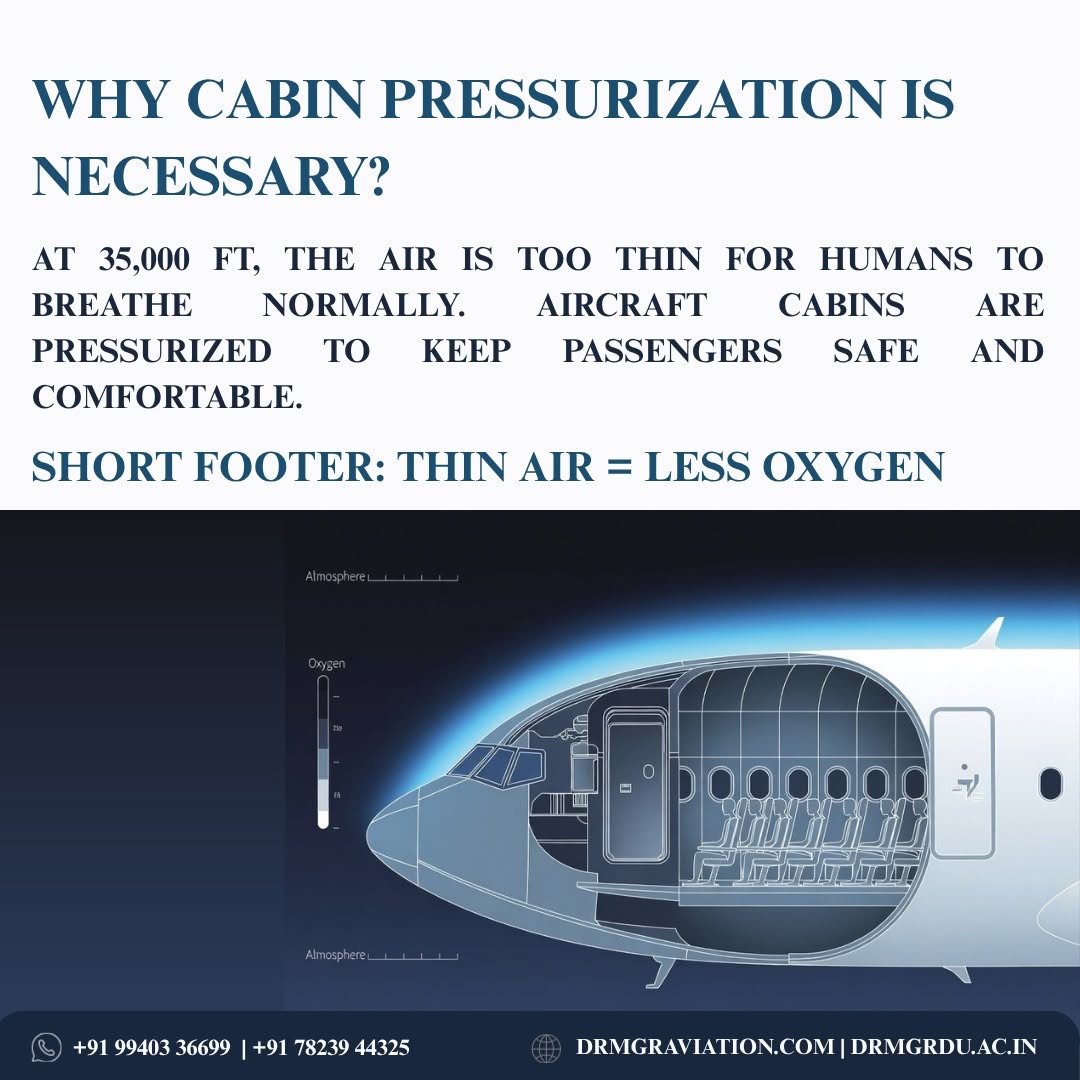
When cruising at 35,000 feet, commercial airliners operate in an environment where the outside air pressure is roughly one-fourth of that at sea level, and temperatures plummet to around minus 50 degrees Celsius. At this extreme altitude, human blood oxygen levels would drop rapidly, leading to hypoxia within minutes without specialized life support measures. Understanding how commercial aircraft maintain a safe, comfortable, and breathable environment is a fundamental concept taught to students at Dr MGR Aviation Academy. Cabin pressurization is a triumph of aerospace engineering that balances complex physical laws with advanced mechanical systems.
The Fundamentals of High-Altitude Aviation Physiology
Before examining the mechanical systems, it is vital to understand why pressurization is necessary. As altitude increases, atmospheric pressure decreases exponentially. While the percentage of oxygen in the atmosphere remains roughly constant at 21 percent, the barometric pressure drops significantly. This means there are fewer oxygen molecules per breath, preventing the human lungs from transferring adequate oxygen into the bloodstream.
Aviation authorities, such as the Directorate General of Civil Aviation (DGCA) and the Federal Aviation Administration (FAA), mandate that commercial aircraft maintain a cabin pressure altitude equivalent to a maximum of 8,000 feet, regardless of the actual cruising altitude. This altitude simulation ensures passengers and crew can breathe normally without requiring supplemental oxygen masks during routine flights.
How Bleed Air Powers Cabin Pressurization Systems
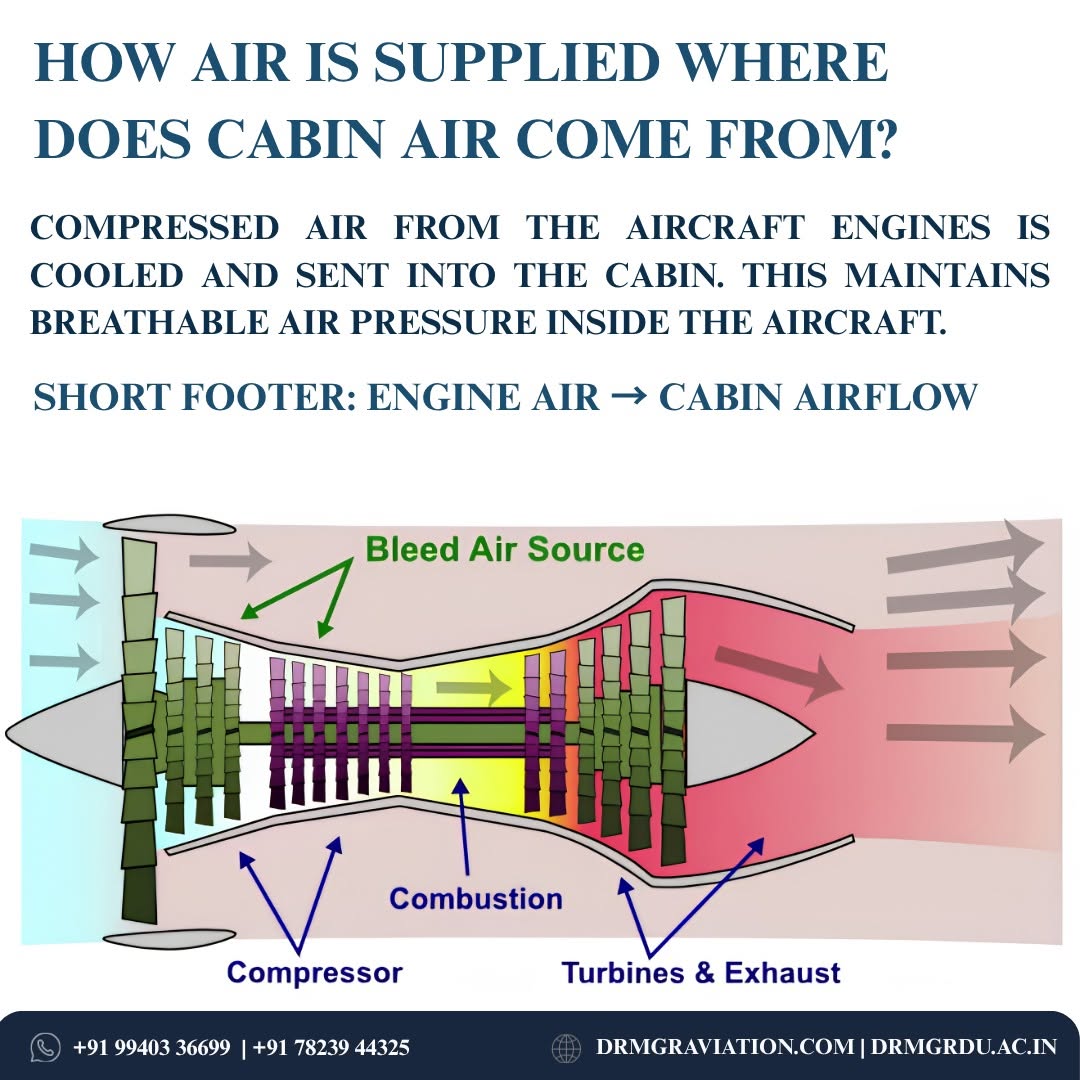
The primary source of air for pressurizing a modern commercial aircraft comes directly from the engines. As air enters the jet engine’s compressor section, it is squeezed and heated intensely. This compressed air, known in the industry as bleed air, is siphoned off from the compressor stages before fuel is added in the combustion chamber.
Because bleed air is excessively hot and under high pressure, it must be treated before entering the passenger cabin. The air is routed through an air conditioning pack, which utilizes heat exchangers and air cycle machines to cool and regulate the air to a comfortable temperature. Once conditioned, this fresh, oxygen-rich air is continuously pumped into the cabin through gaspockets and overhead vents, replacing the entire volume of cabin air every two to three minutes.
Regulating Pressure with Outflow Valves
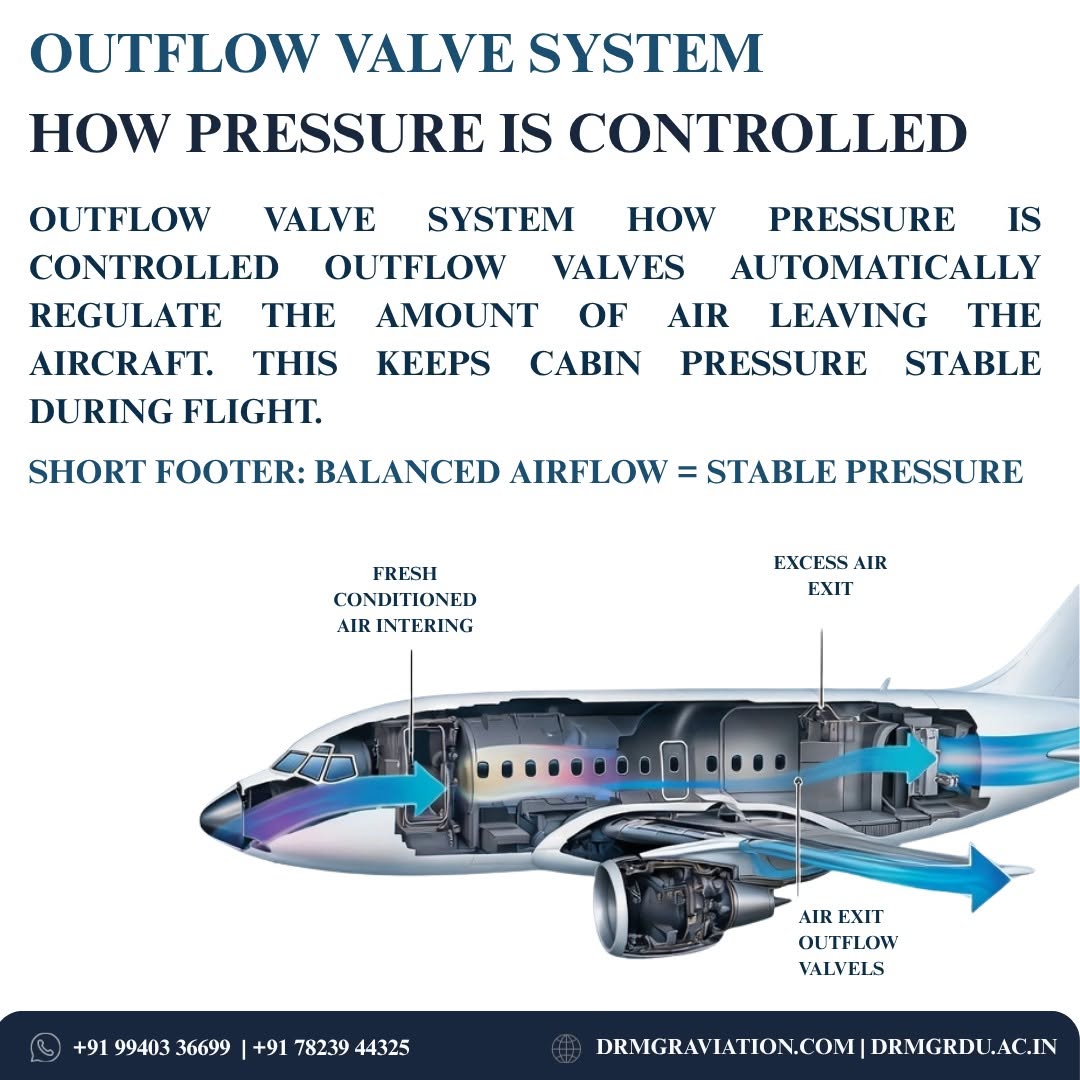
Pumping air into the cabin is only half the equation; regulating the rate at which air escapes is just as critical to maintaining a stable environment. This regulation is managed by the outflow valve, a computer-controlled mechanical door usually located at the rear or bottom of the fuselage.
A dedicated cabin pressure controller automatically adjusts the position of the outflow valve based on data gathered from takeoff, cruising, and landing phases. During takeoff, the outflow valve remains partially open to allow a smooth transition. As the aircraft climbs, the controller gradually closes the valve, trapping more air inside and building up the cabin pressure differential to match the designated 8,000-foot equivalent. During descent, the valve slowly opens to equalize the cabin pressure with the ambient atmospheric pressure at the destination airport.
Redundancy and Safety Systems in Aerospace Engineering
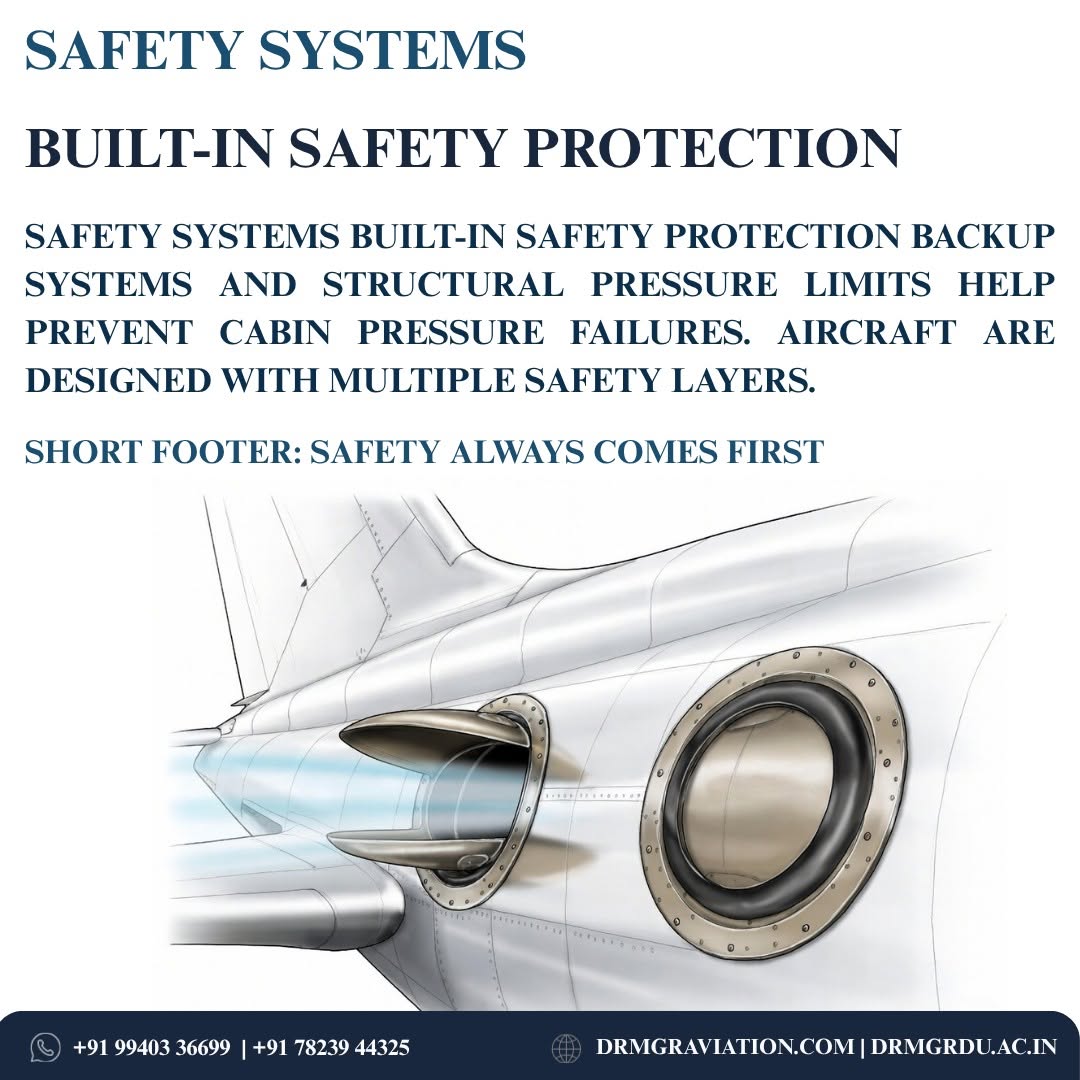
Safety is the absolute cornerstone of commercial aviation. Aircraft designers build multiple layers of redundancy into pressurization and environmental control systems. If a primary outflow valve fails, a secondary backup valve automatically takes over. Additionally, positive pressure relief valves and negative pressure relief valves are installed to ensure the fuselage structural integrity is never compromised by accidental over-pressurization or under-pressurization.
In the rare event of a sudden rapid decompression, automatic deployment systems drop oxygen masks for every passenger and crew member, providing an immediate supplemental supply while the flight crew initiates an emergency descent to a safe altitude below 10,000 feet.
Launch Your Career in Aviation Engineering with Dr MGR Aviation Academy
Mastering complex aircraft systems like environmental controls, avionics, and structural engineering requires rigorous academic training combined with hands-on practical exposure. Located in Chennai, Dr MGR Aviation Academy provides world-class educational programs tailored for aspiring aviation professionals, aeronautical engineers, and future airline leaders.
Whether you aspire to work on aircraft maintenance lines, manage airport operations, or step into specialized aviation management roles, our industry-aligned curriculum equips you with the technical expertise needed to succeed in the fast-growing global aviation sector. Explore our specialized courses and take your first step toward a high-flying career today.

Frequently Asked Questions
What altitude is simulated inside an aircraft cabin during flight?
Commercial aircraft typically maintain a cabin pressure altitude equivalent to between 5,000 and 8,000 feet above sea level, ensuring passengers can breathe comfortably.
Where does the air inside an aircraft cabin come from?
Cabin air is supplied as bleed air from the engine compressors, which is then cooled, filtered, and regulated by the aircraft environmental control system.
What controls the air pressure inside an aircraft cabin?
An automated cabin pressure controller continuously monitors flight parameters and adjusts the outflow valve to regulate the rate at which air leaves the fuselage.
How often is the air replaced inside a commercial aircraft cabin?
Modern aircraft ventilation systems completely replace the cabin air with a mixture of fresh bleed air and HEPA-filtered recirculated air every two to three minutes.
How can I study aviation engineering and systems at Dr MGR Aviation Academy?
You can enroll in our specialized aviation and management programs in Chennai by contacting our admissions team at +91 99403 36699 or visiting our official website.