
The aviation industry depends heavily on aircraft leasing to manage operations, reduce financial risk, and expand airline services efficiently. Instead of purchasing aircraft immediately, many airlines lease aircraft based on operational needs, budget, route expansion, or seasonal demand.
Among the most commonly used aircraft leasing methods are Wet Lease and Dry Lease. Although both involve renting aircraft, the level of operational control, responsibilities, crew management, and financial commitments are very different.
Understanding these leasing systems is very important for aviation students, airline professionals, airport managers, and anyone interested in airline operations.
1. Wet Lease vs Dry Lease
Aircraft leasing is an agreement where one company provides aircraft to another airline for a specified period and cost. The difference between Wet Lease and Dry Lease mainly depends on what services are included along with the aircraft.
In a Wet Lease, the leasing company provides:
- Aircraft
- Pilots
- Cabin Crew
- Maintenance
- Insurance
In a Dry Lease, the leasing company provides only:
- Aircraft
The airline operating the aircraft must arrange everything else independently.
Wet Lease is generally used for short-term operational needs, while Dry Lease is preferred for long-term business expansion and operational independence.
Both leasing systems help airlines:
- Expand quickly
- Reduce immediate aircraft purchase costs
- Manage seasonal passenger demand
- Replace grounded aircraft temporarily
- Operate new routes efficiently
Aircraft leasing has become an essential part of modern aviation because airlines must remain flexible in a highly competitive industry.
2. What is a Wet Lease?
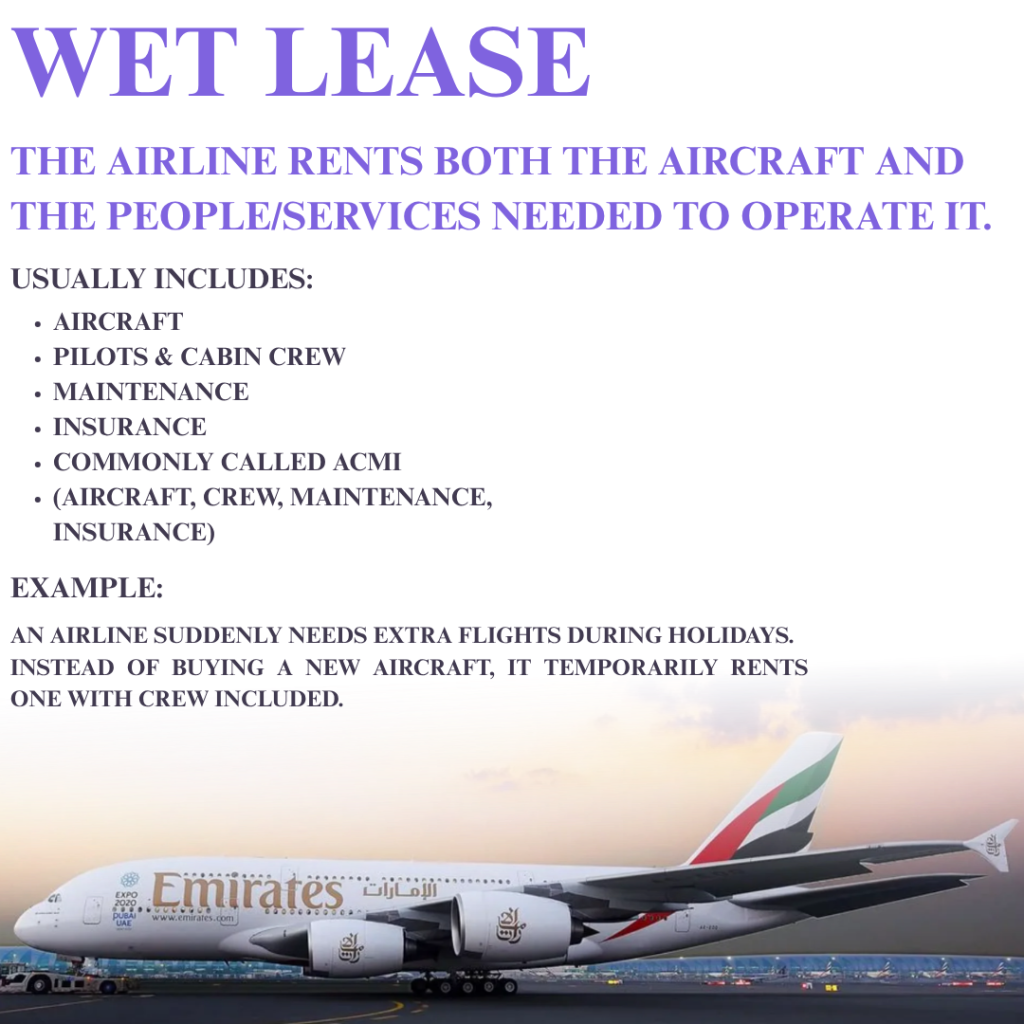
A Wet Lease is a leasing arrangement where the leasing company provides both the aircraft and the operational services required to operate it.
This usually includes:
- Aircraft
- Pilots
- Cabin Crew
- Maintenance
- Insurance
This system is commonly called ACMI Leasing:
- A – Aircraft
- C – Crew
- M – Maintenance
- I – Insurance
Under a Wet Lease, the aircraft often operates using the leasing company’s Air Operator Certificate (AOC). The leasing company controls flight operations, maintenance standards, and crew responsibilities.
Wet Leasing is widely used when airlines:
- Need extra aircraft during holiday seasons
- Face sudden passenger demand
- Experience aircraft maintenance issues
- Launch new routes quickly
- Require temporary operational support
Example of Wet Lease
Suppose an airline suddenly receives high passenger bookings during summer holidays. Instead of buying a new aircraft immediately, the airline temporarily rents an aircraft with crew and operational support from another airline.
This helps the airline continue operations without delay.
Advantages of Wet Lease
- Faster operational setup
- No need to recruit additional crew immediately
- Lower short-term operational risk
- Useful during emergencies or seasonal demand
- Helpful for new airlines entering the market
Disadvantages of Wet Lease
- Higher operational cost
- Less airline control
- Branding limitations
- Temporary solution only
Wet Lease arrangements are usually short-term because they are more expensive compared to long-term Dry Leasing.
3. Wet Lease Responsibilities
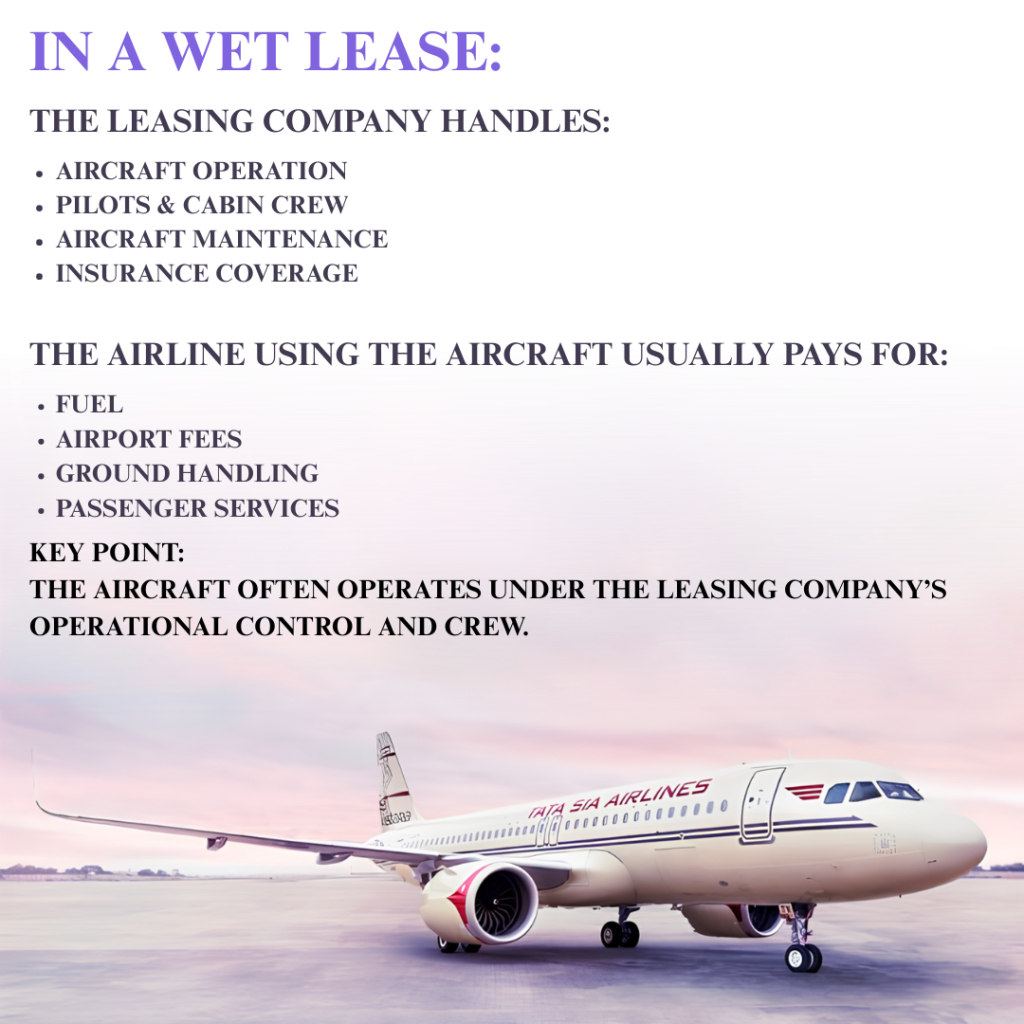
In a Wet Lease agreement, responsibilities are divided between the leasing company and the airline using the aircraft.
Responsibilities of the Leasing Company
The leasing company handles:
- Aircraft operation
- Pilots and cabin crew
- Aircraft maintenance
- Technical inspections
- Insurance coverage
- Safety compliance
- Flight operational control
The leasing company ensures the aircraft operates according to aviation safety regulations and international operational standards.
Responsibilities of the Airline Using the Aircraft
The airline renting the aircraft usually pays for:
- Fuel costs
- Airport fees
- Ground handling
- Catering services
- Passenger support services
Although the airline sells tickets and manages passengers, the actual aircraft operation remains under the leasing company.
Operational Control
One of the most important aspects of Wet Lease is operational control. The aircraft usually flies under the leasing company’s:
- Crew
- Maintenance system
- Safety procedures
- Operational authority
This arrangement helps airlines quickly increase flight operations without managing additional operational pressure.
4. What is a Dry Lease?
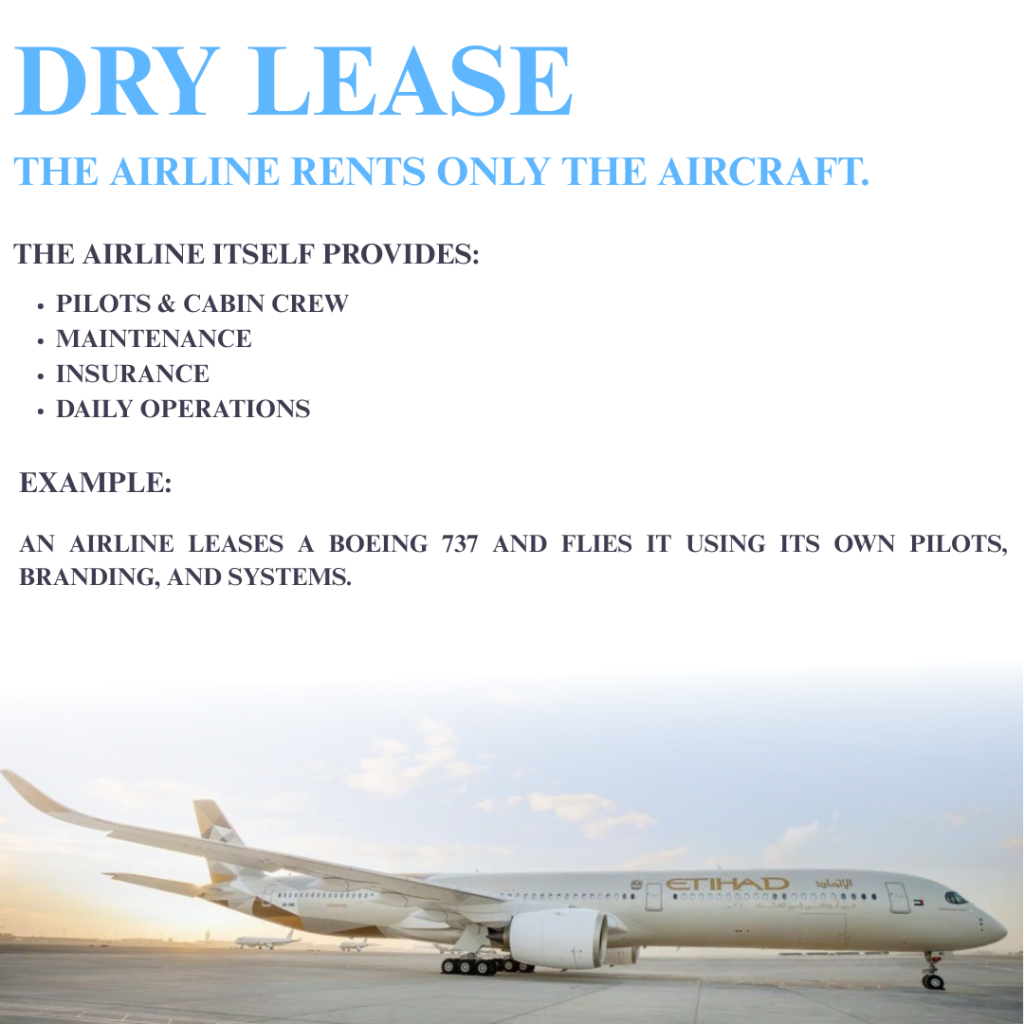
A Dry Lease is a leasing arrangement where the leasing company provides only the aircraft.
The airline leasing the aircraft must independently arrange:
- Pilots
- Cabin Crew
- Maintenance
- Insurance
- Flight operations
- Regulatory approvals
Unlike Wet Lease, the airline has complete operational control over the aircraft.
Dry Leasing is commonly used for:
- Long-term expansion
- Fleet growth
- Airline independence
- Cost optimization
Example of Dry Lease
An airline leases a Boeing aircraft from a leasing company and operates it using:
- Its own pilots
- Its own branding
- Its own maintenance system
- Its own operational procedures
The leasing company only owns the aircraft and does not participate in daily operations.
Advantages of Dry Lease
- Lower long-term operational cost
- Full airline operational control
- Better branding flexibility
- More profitable for long-term use
- Greater business independence
Disadvantages of Dry Lease
- Requires trained crew
- High operational responsibility
- Maintenance management required
- Insurance costs handled by airline
- More regulatory compliance responsibility
Dry Leasing is generally preferred by established airlines with strong operational infrastructure.
5. Dry Lease Responsibilities
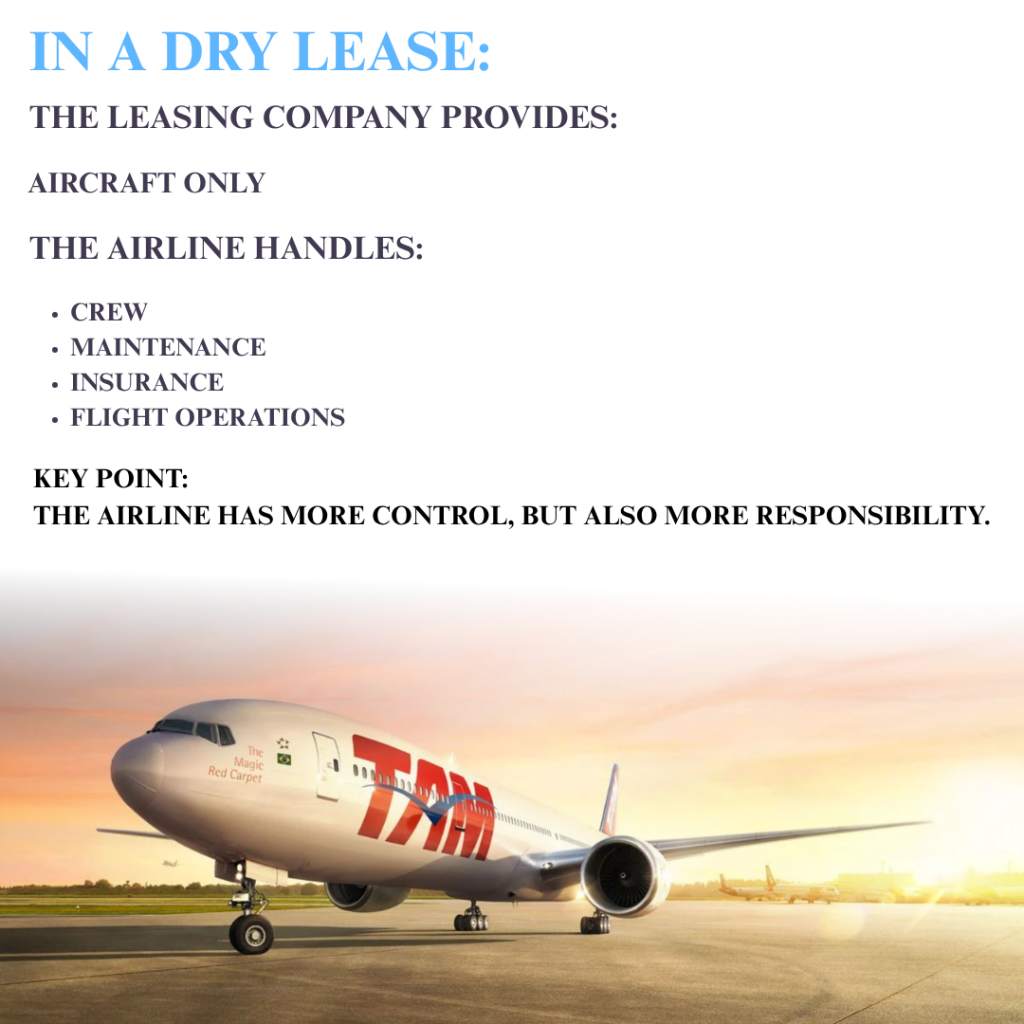
In a Dry Lease agreement, most operational responsibilities belong to the airline leasing the aircraft.
Responsibilities of the Leasing Company
The leasing company provides:
- Aircraft only
The leasing company remains the legal owner of the aircraft but does not operate it.
Responsibilities of the Airline
The airline must handle:
- Pilot recruitment
- Cabin crew management
- Aircraft maintenance
- Insurance coverage
- Flight scheduling
- Safety compliance
- Operational approvals
- Passenger services
Operational Control
Under a Dry Lease, the airline has full control over:
- Flight operations
- Aircraft branding
- Crew management
- Route operations
- Safety systems
This gives airlines greater flexibility but also increases operational responsibility.
Dry Leasing is commonly used for long-term airline business growth because airlines can operate aircraft fully under their own identity.
6. Wet Lease vs Dry Lease – Quick Comparison
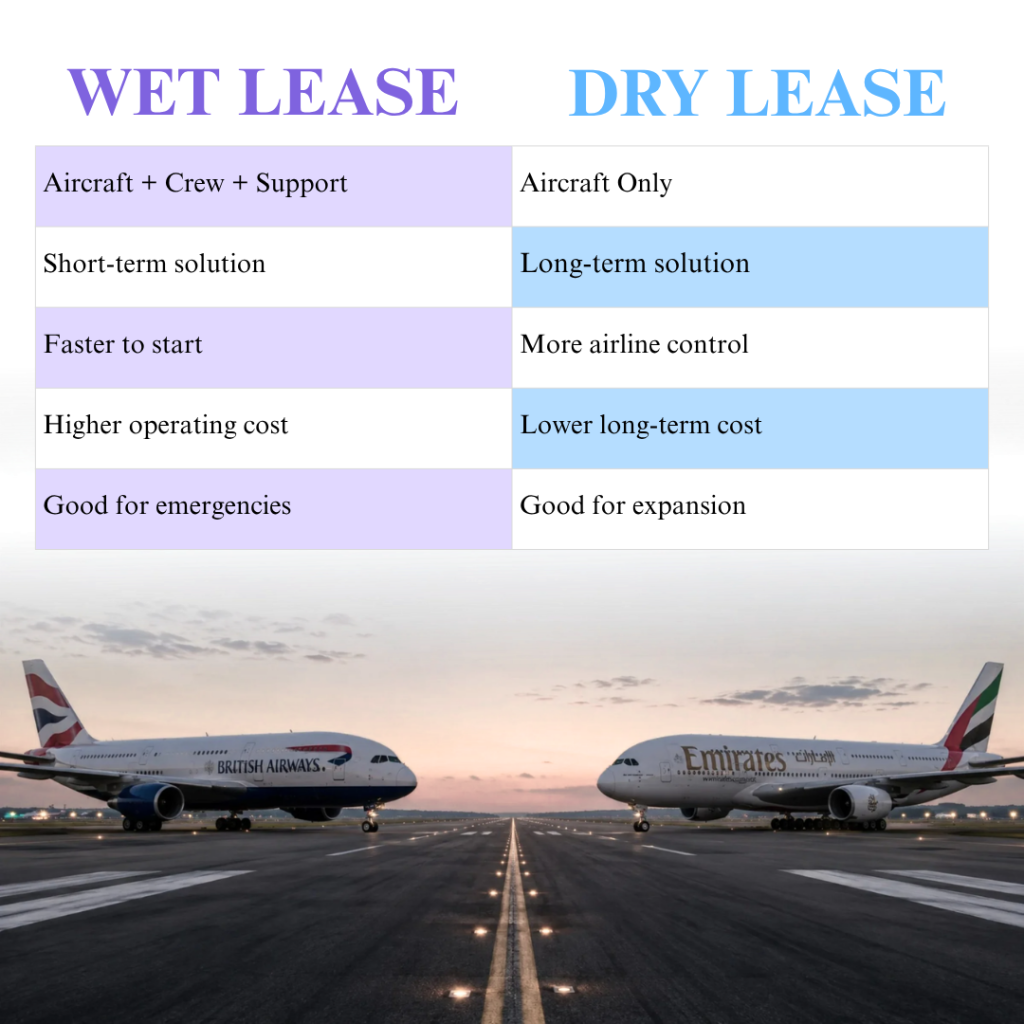
Simple Understanding
Wet Lease:
“Aircraft with complete operational support.”
Dry Lease:
“Only aircraft; airline manages everything.”
7. Which Lease Type is Better?
Both Wet Lease and Dry Lease are important in aviation, and the best choice depends on airline requirements.
Wet Lease is Better When:
- Airlines need immediate aircraft
- Seasonal demand increases suddenly
- Airlines face aircraft shortages
- New routes must launch quickly
- Operational support is required temporarily
Wet Lease is mainly a short-term operational solution.
Dry Lease is Better When:
- Airlines plan long-term growth
- Airlines want complete operational control
- Airlines have trained crew and infrastructure
- Airlines want stronger brand identity
- Cost reduction is important over time
Dry Lease is mainly a long-term business strategy.
Industry Usage
Many international airlines use both leasing systems depending on:
- Business strategy
- Passenger demand
- Fleet expansion plans
- Financial conditions
Aircraft leasing has become one of the most important operational strategies in global aviation.
Conclusion
Wet Lease and Dry Lease are two essential aircraft leasing systems used throughout the aviation industry. Both methods help airlines remain flexible, operationally efficient, and financially manageable.
A Wet Lease provides aircraft along with crew, maintenance, and insurance, making it ideal for short-term operational needs and emergency situations. A Dry Lease provides only the aircraft, allowing airlines complete operational control and long-term business flexibility.
Understanding aircraft leasing is very important for aviation students because it gives insight into:
- Airline operations
- Fleet management
- Aviation business strategy
- Aircraft operational planning
- Airline financial management
As the aviation industry continues to grow globally, aircraft leasing will remain one of the key pillars supporting airline expansion and operational success.
For students dreaming of a career in aviation, learning these operational concepts helps build strong industry knowledge and professional understanding.